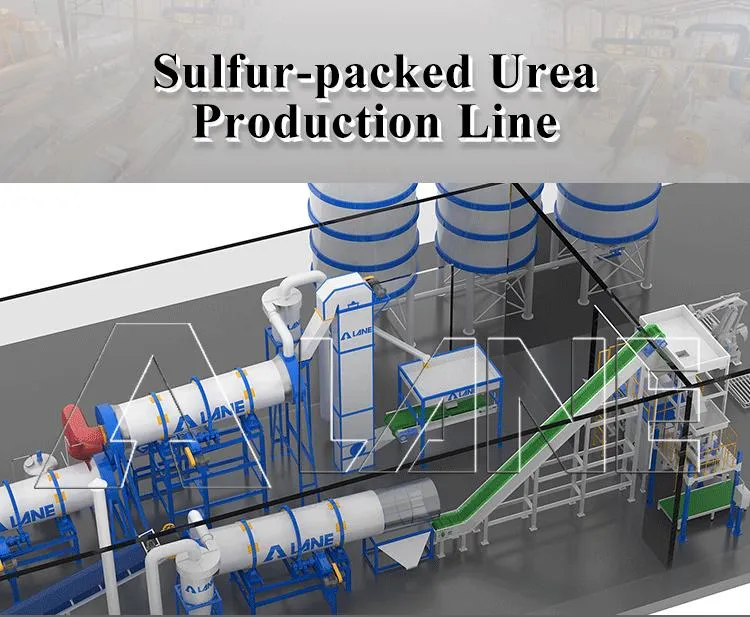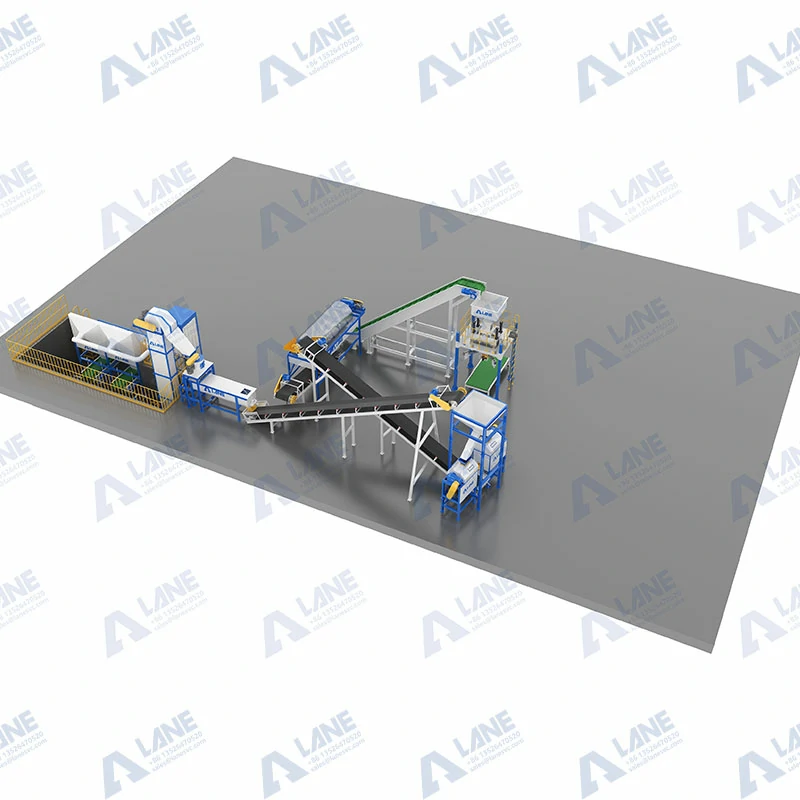
Limestone is widely used in agriculture, construction, environmental protection, and industrial manufacturing. However, fine limestone powder can create dust pollution, increase transportation losses, and cause difficulties during storage, handling, and automatic feeding. Granulation provides an effective solution by converting fine limestone powder into uniform, easy-to-handle granules.
LANE provides customized Limestone Granulation Production Lines designed to process limestone powder into high-quality granular products. Through appropriate raw material preparation, granulation, drying, screening, and packaging processes, manufacturers can improve product consistency and meet different market requirements.
In this article, we introduce a LANE customer project, explain the limestone granulation process, and share important equipment parameters and engineering considerations.
A customer from Algeria approached LANE with a requirement to establish a limestone granulation production facility. The customer had access to limestone powder but needed a more efficient processing solution to manufacture uniform granular limestone for commercial distribution.
The main challenges included:
After evaluating the customer’s raw material characteristics, production requirements, and available factory space, LANE’s engineering team developed a customized limestone granulation solution.
The production line was designed around the customer’s required capacity, raw material properties, and final product specifications.
| Project Parameter | Project Information |
|---|---|
| Project Name | Limestone Granulation Production Line |
| Customer Location | Algeria |
| Raw Material | Limestone Powder |
| Main Component | Calcium Carbonate (CaCO₃) |
| Designed Capacity | 10 TPH |
| Granulation Method | Rotary Drum |
| Final Product | Granular Limestone |
| Target Particle Size | 3–5 mm |
| Production Process | Crushing – Mixing – Granulation – Drying – Screening – Packaging |
| Equipment Supplier | LANE Machinery |
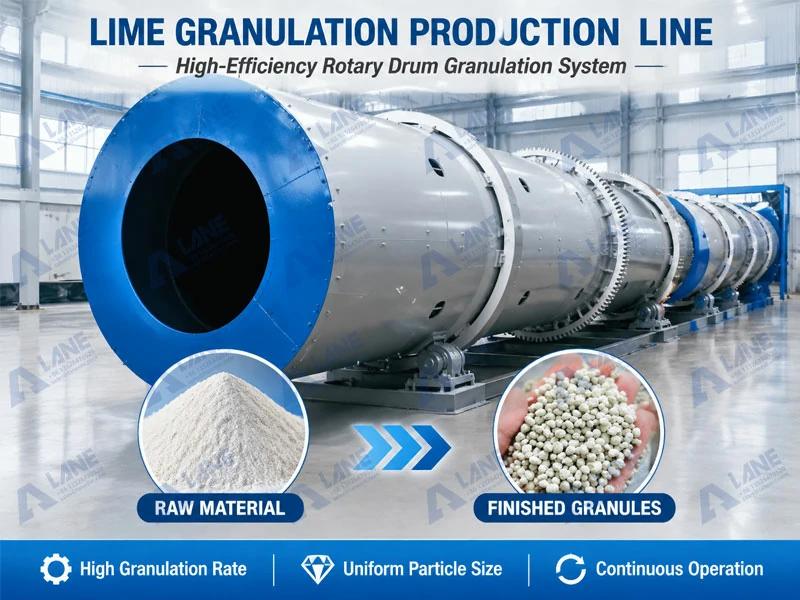
The complete lime granulation production line can include the following equipment, depending on the selected granulation process:
LANE’s engineering team can adjust the equipment configuration according to the customer’s raw material analysis, target capacity, and installation conditions.
The limestone granulation process depends on the physical properties of the raw material and the required final product. Two common methods are dry compaction granulation and wet granulation.
The raw limestone is crushed and screened to achieve a suitable particle size before entering the granulation process.
Fine and relatively uniform powder improves feeding stability and helps maintain consistent granulation performance.
Limestone has relatively low natural binding properties, so binder selection is an important consideration, particularly for wet granulation.
A powder mixer distributes the limestone powder and other required ingredients evenly. The binder type and addition rate should be determined through laboratory granulation tests.
Depending on the customer’s requirements, LANE can recommend different granulation technologies.
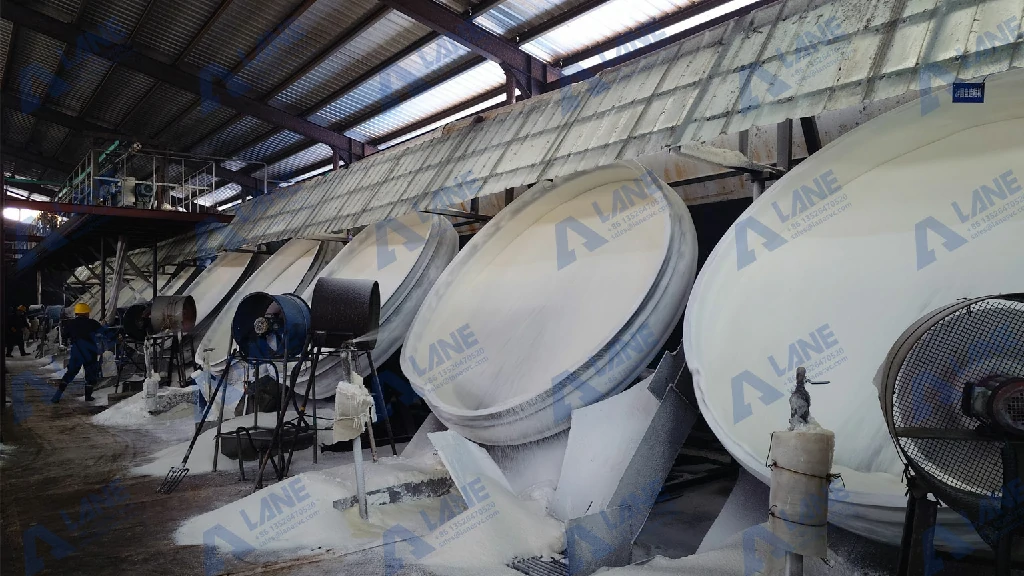
For wet granulation processes, freshly formed granules usually contain excess moisture.
A rotary drum dryer reduces product moisture to the required level. A cooling system can be added when necessary to improve product handling and packaging conditions.
Dry compaction granulation generally does not require a dedicated drying stage unless the raw material or final product specifications require additional moisture control.
A vibrating screen separates the finished granules according to particle size.
Qualified products proceed to packaging, while oversized and undersized materials can be returned to the crushing or granulation stage.
This closed-loop material recycling process helps reduce raw material losses and improve overall production efficiency.
Finished limestone granules are transferred to an automatic weighing and packaging machine.
Common packaging options include 25 kg, 40 kg, and 50 kg bags, as well as customized bulk packaging solutions.
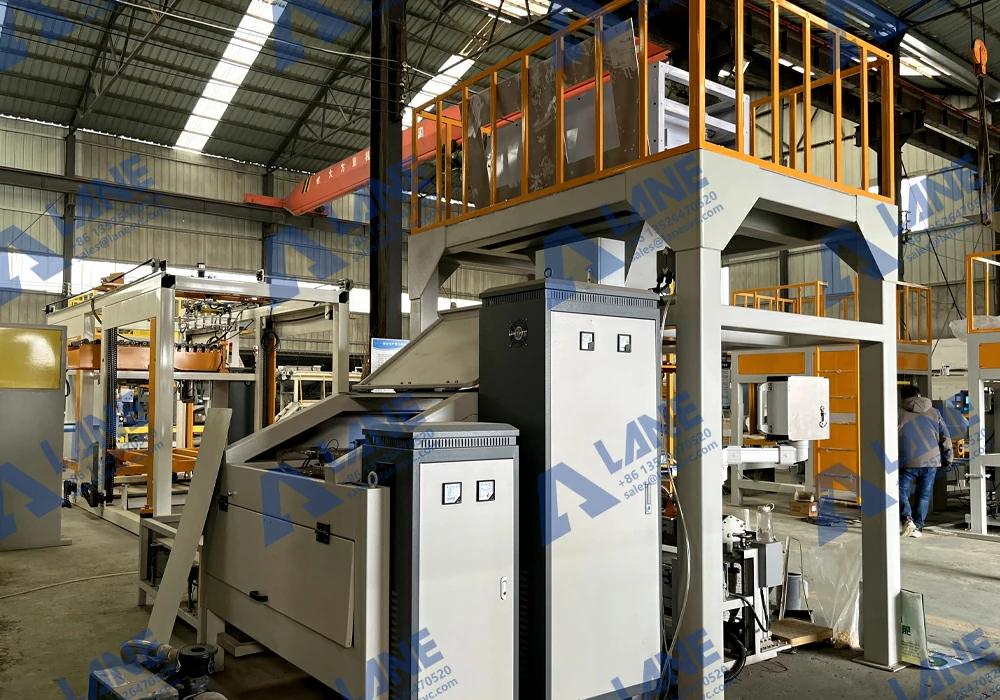
The technical configuration of a limestone granulation line should be determined by raw material properties, production capacity, granulation technology, and final product requirements.
The following table provides indicative engineering reference ranges rather than guaranteed specifications for every project.
| Parameter | Typical Reference |
|---|---|
| Main Raw Material | Limestone Powder |
| Main Chemical Component | CaCO₃ |
| Raw Material Particle Size | 80–200 mesh (reference range) |
| Raw Material Moisture | Determined by granulation method |
| Finished Granule Size | 2–5 mm |
| Finished Product Moisture | Customized, according to application |
| Granule Shape | Spherical or irregular granules |
| Bulk Density | Requires material testing |
| Granule Crushing Strength | Determined by product requirements |
| Product Fines Content | Controlled through screening |
| Equipment | Main Function | Key Technical Parameters |
|---|---|---|
| Raw Material Feeder | Controlled feeding | Variable feeding speed |
| Powder Mixer | Uniform mixing | Working volume, mixing time, motor power |
| Double Roller Granulator | Dry compaction | Roller diameter, roller width, operating pressure |
| Disc Granulator | Wet granulation | Disc diameter, inclination angle, rotational speed |
| Rotary Drum Granulator | Continuous wet granulation | Drum diameter, drum length, rotational speed |
| Rotary Dryer | Moisture reduction | Drum diameter, drum length, heat source, evaporation capacity |
| Vibrating Screen | Particle classification | Screen layers, mesh size, screening area |
| Packaging Machine | Product weighing and packing | Weighing range, packaging speed |
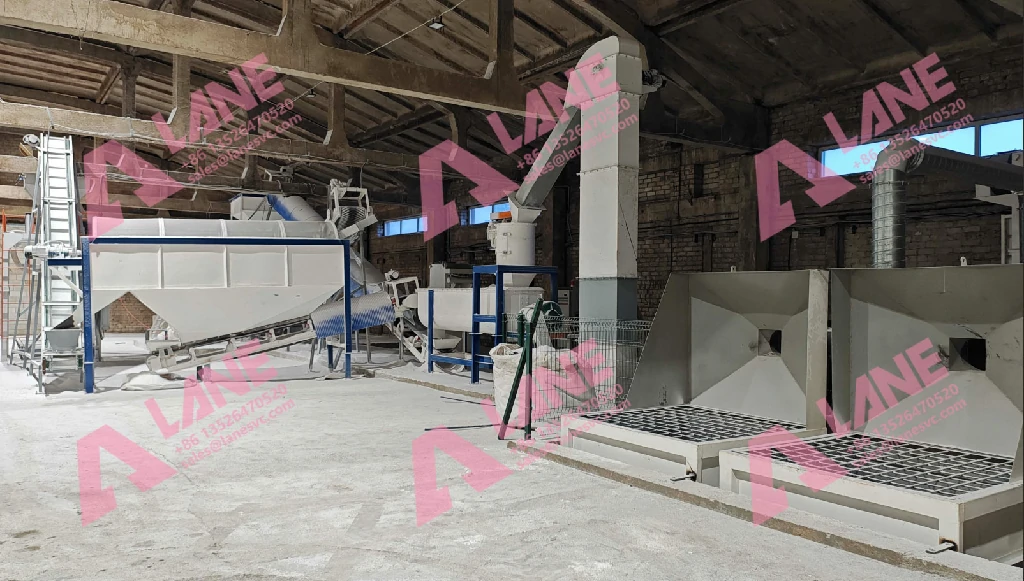
For a professional limestone granulation project, several parameters deserve particular attention:
1. Roller Pressure
For dry compaction, roller pressure directly influences powder densification, flake formation, and subsequent granule strength. The required pressure depends on limestone fineness, moisture, compressibility, and binder characteristics.
2. Granulation Disc Inclination Angle
The disc inclination angle affects material residence time, particle movement, and granule growth. It should be adjusted according to the material’s agglomeration characteristics.
3. Drying Temperature and Residence Time
For wet granulation, drying conditions must be selected according to the binder’s thermal properties and the finished product’s moisture requirements. Excessive temperatures may affect certain additives or product characteristics.
4. Screening Efficiency
Screen aperture size and screening capacity determine the particle-size distribution of the finished product. A suitable recycling system helps improve the qualified product yield.
5. Granule Crushing Strength
Granule strength is essential for storage, transportation, and bagging. It should be evaluated through actual compression or drop tests rather than estimated from particle size alone.
Choosing the right equipment supplier is essential for achieving stable production and consistent product quality.
LANE Machinery provides customized industrial granulation and material processing solutions based on different raw material characteristics and production requirements.
Engineering-Based Equipment Selection
LANE evaluates limestone fineness, moisture, bulk density, binding properties, and target granule specifications before recommending a suitable granulation method.
Customized Production Line Design
From individual granulation machines to complete processing systems, equipment configuration can be adjusted according to factory layout, production capacity, and investment requirements.
Granulation Testing Before Investment
Raw material granulation tests help evaluate particle formation, binder requirements, granule strength, and process feasibility before final equipment selection.
Integrated Production Solutions
LANE can provide coordinated equipment covering feeding, mixing, granulation, drying, screening, conveying, and packaging.
Technical Support and After-Sales Service
LANE supports customers with equipment installation guidance, operation instructions, spare parts, and technical assistance throughout the project lifecycle.
Established in 2010, LANE Machinery has a 5,000 m² manufacturing facility, approximately 100 employees, and 20 senior engineers. Its equipment has been supplied to customers in more than 100 countries.
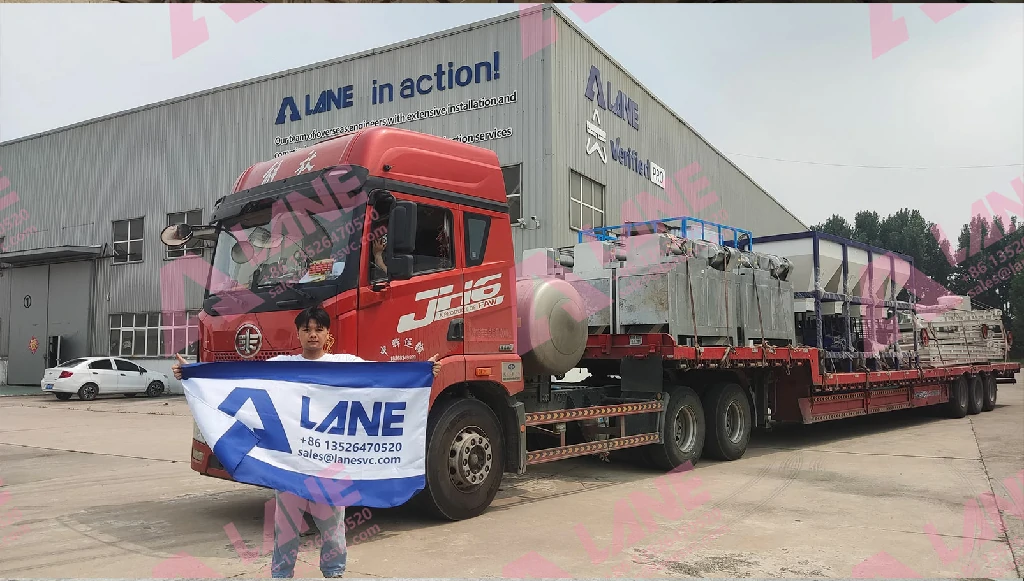
Granular limestone is used in several industries, depending on its chemical composition, particle size, and physical properties.
The final product specifications should be matched to the intended application, particularly regarding chemical purity, particle-size distribution, moisture, and applicable quality standards.
Yes, under certain conditions. Dry compaction using a double roller granulator may produce limestone granules without additional binders if the powder has suitable physical properties and can achieve sufficient compactability. However, actual performance must be verified through granulation tests.
There is no single best granulator for every limestone project. A double roller granulator is suitable for dry compaction, while disc and rotary drum granulators are commonly considered for wet granulation. The selection depends on raw material characteristics, required output, and final granule specifications.
Common commercial target sizes include 2–5 mm and 2–4 mm. However, the actual particle-size specification should be determined by the customer’s application and market requirements.
Not necessarily. Wet granulation usually requires drying to control final moisture. Dry compaction granulation generally does not need a rotary dryer, although additional drying may be necessary depending on the raw material and product specifications.
The investment depends on production capacity, granulation technology, equipment configuration, automation level, and installation requirements. LANE can provide a customized quotation after evaluating the customer’s raw material and production targets.
Whether you plan to process agricultural limestone, calcium carbonate powder, or other limestone-based materials, selecting the correct granulation technology is the first step toward a successful production project.
LANE Machinery can help you evaluate raw material characteristics, conduct granulation tests, select suitable equipment, and design a complete limestone granulation production line.
Send us your raw material information, expected production capacity, and desired granule size. Our engineering team will help you find a suitable processing solution.