author: Zero Shen
from: LANE Machinery Groups
Northern Europe offers interesting opportunities for fertilizer manufacturers looking to expand into specialty fertilizers and controlled-release products. Countries such as Finland, Sweden, Norway, and Denmark have developed agricultural sectors, established fertilizer supply chains, and growing interest in efficient nutrient management.
Urea is widely used as a nitrogen fertilizer. However, conventional urea releases nitrogen relatively quickly after application. Depending on soil conditions, temperature, rainfall, and application methods, part of the nitrogen may be lost through ammonia volatilization, leaching, or other processes.
Coated urea provides an alternative by controlling the release of nitrogen over a longer period. This makes sulfur-coated urea and other coated fertilizers valuable products for manufacturers targeting specialized agricultural applications.
For investors, establishing a urea coating production facility can be an opportunity to diversify an existing fertilizer business, develop higher-value fertilizer products, and serve specialized agricultural markets.
Finland has an established fertilizer manufacturing industry and a significant agricultural sector. Its climate, relatively short growing season, and specific crop nutrient requirements create opportunities for specialized fertilizer products.
Fertilizer manufacturers can explore sulfur-coated urea production to expand their controlled-release fertilizer portfolios.
For companies already processing urea granules or producing compound fertilizers, installing a complete urea coating system may provide a way to enter the specialty fertilizer segment without building an entirely new fertilizer manufacturing facility.
Finland is also a particularly interesting market for equipment suppliers because industrial fertilizer production capabilities are already established.
Sweden has a developed agricultural sector and an increasing focus on resource-efficient farming practices.
Coated fertilizers may offer benefits in applications where nutrient release timing and fertilizer application efficiency are important.
Local fertilizer producers and agricultural input suppliers can evaluate the potential of sulfur-coated urea and other controlled-release fertilizer products as part of their product development strategies.
Norway has diverse agricultural conditions, including grassland farming and livestock production.
Fertilizer requirements vary according to crop type, soil conditions, and regional climate. This creates opportunities for manufacturers to develop specialized fertilizer formulations.
Sulfur-coated urea production equipment may be suitable for companies interested in developing controlled-release nitrogen fertilizers for specific agricultural applications.
Denmark has an advanced agricultural sector with strong fertilizer distribution and agricultural technology networks.
For fertilizer manufacturers and investors, the market opportunity may lie in supplying differentiated fertilizer products rather than competing solely on conventional fertilizer prices.
Coated urea can be considered as one product option for manufacturers developing specialty fertilizer portfolios.
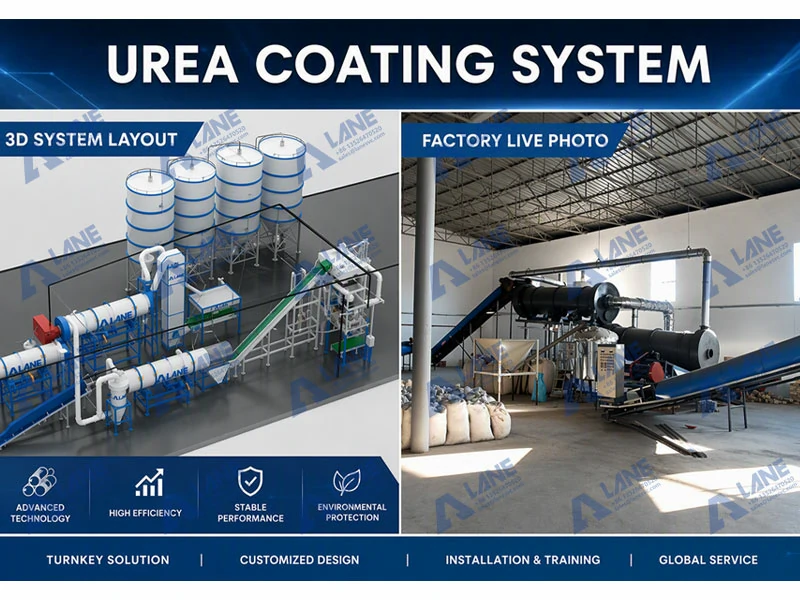
Sulfur-coated urea (SCU) is produced by covering urea granules with a layer of molten sulfur. The sulfur coating acts as a physical barrier that regulates the movement of water into the granules and the release of nitrogen.
Compared with conventional granular urea, sulfur-coated urea offers several potential advantages:
The actual nutrient release performance depends on coating quality, coating thickness, sealant formulation, granule characteristics, and soil conditions. Product testing is essential before commercial production.
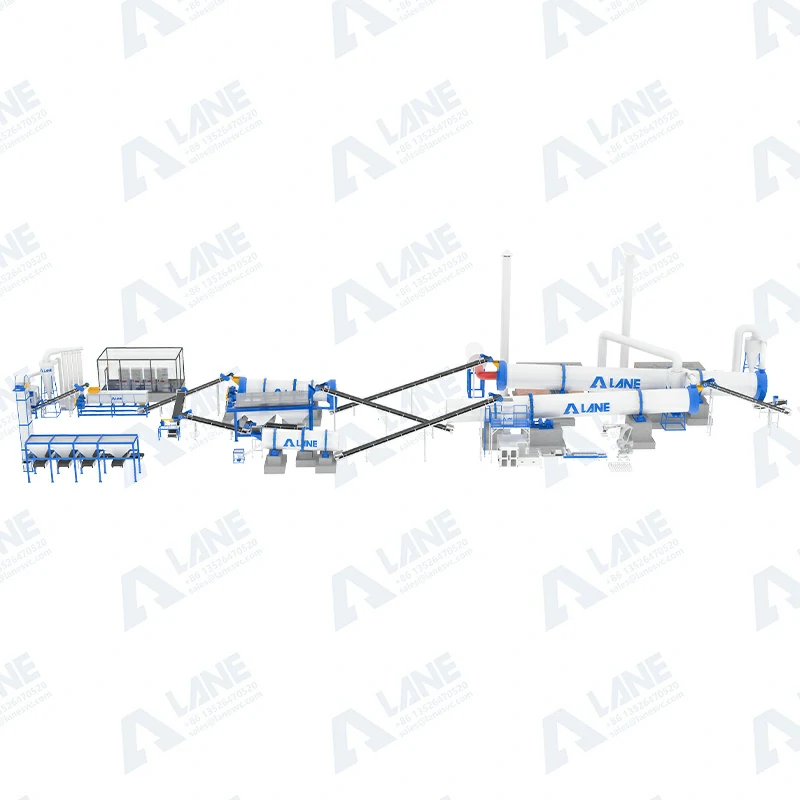
A complete sulfur-coated urea production line integrates raw material handling, sulfur melting, granule preheating, coating, cooling, screening, and packaging.
The typical production process includes the following stages.
Granular urea is supplied to the production system through a feeding and conveying unit.
Screening can be used to remove oversized and undersized particles and maintain relatively consistent granule size before coating.
The urea granules are heated to a suitable temperature before entering the coating equipment.
Proper preheating helps improve sulfur adhesion and supports stable coating operations.
Solid sulfur is fed into a sulfur melting tank and heated until it reaches the required molten state.
The melting system should maintain a stable operating temperature and provide suitable filtration and transfer arrangements.
Molten sulfur is delivered to a spraying system and distributed over the surface of rotating urea granules inside a coating drum.
Uniform sulfur distribution is essential for achieving consistent coating thickness and product quality.
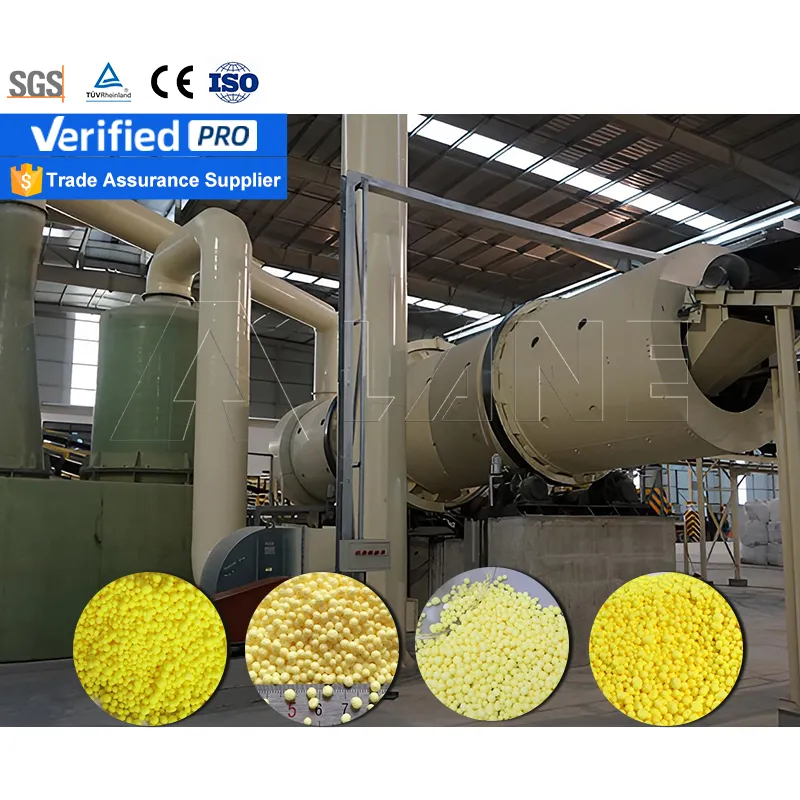
Depending on the required product performance, an additional sealant layer may be applied after sulfur coating.
Wax-based or other suitable sealing materials can help improve coating integrity and regulate nutrient release.
The coated urea granules are cooled to solidify the coating layer and prevent particles from sticking together during subsequent handling.
The final product is screened to remove unsuitable particles and then transferred to automatic weighing and packaging equipment.
A complete sulfur-coated urea production line generally includes:
| Equipment | Main Function |
|---|---|
| Urea Feeding System | Supplies raw urea granules |
| Screening Machine | Controls granule size |
| Urea Preheater | Heats urea before coating |
| Sulfur Melting Tank | Melts solid sulfur |
| Sulfur Pumping System | Transfers molten sulfur |
| Sulfur Spraying System | Distributes molten sulfur |
| Rotary Coating Drum | Applies sulfur coating |
| Sealant Coating System | Applies an optional sealing layer |
| Cooling Machine | Solidifies the coating |
| Final Screening Machine | Separates qualified granules |
| Automatic Packing Machine | Weighs and packs finished products |
The equipment configuration should be determined by the required production capacity, coating ratio, final product specifications, and automation level.
The investment cost of a sulfur-coated urea production line depends on several technical and commercial factors.
There is no universal equipment price because different projects require different capacities, equipment configurations, and engineering solutions.
The main factors affecting investment costs include:
Production capacity
A small-capacity coating plant generally requires a smaller equipment configuration, while larger plants need higher-capacity feeding, melting, coating, cooling, and packaging systems.
Sulfur melting and spraying system
The sulfur melting tank, heating system, pumps, pipelines, and spraying equipment are important parts of the production investment.
Automation level
Manual, semi-automatic, and fully automatic production systems have different equipment and control requirements.
Auxiliary equipment
Dust collection, material conveying, storage tanks, electrical systems, and workshop facilities should also be included in the project budget.
Installation and engineering
Shipping, installation, commissioning, operator training, and local compliance requirements can affect the total project investment.
Investors should compare complete production line quotations rather than evaluating equipment prices individually.

Before purchasing urea coating equipment in Finland or other Nordic countries, investors should evaluate several important factors.
Urea and sulfur are the primary raw materials for sulfur-coated urea production.
Investors should assess local sourcing options, import costs, transportation arrangements, and raw material quality.
The demand for controlled-release fertilizers varies by crop type, agricultural practices, and local fertilizer distribution channels.
Before investing in a new production line, manufacturers should identify potential customers, distributors, and agricultural applications.
Sulfur melting and urea preheating require thermal energy.
Energy efficiency, insulation, heating methods, and local energy prices should be considered when calculating production costs.
Molten sulfur handling requires appropriate temperature control, ventilation, dust management, and occupational safety measures.
Projects in Northern Europe must also evaluate applicable EU and national regulations, including machinery safety, workplace exposure, emissions, and ATEX requirements where applicable.
Different customers may require different coating ratios, production capacities, granule sizes, and finished product specifications.
Working with an experienced fertilizer machinery manufacturer can help ensure that the production line matches the actual project requirements.
Choosing the right equipment supplier is an important part of a successful fertilizer production project.
Investors should evaluate the following aspects:
A reliable supplier should be able to explain the complete production process and provide a clear equipment configuration based on the customer’s requirements.
LANE Heavy Industry specializes in fertilizer production equipment and customized fertilizer processing solutions.
For investors planning to establish a sulfur-coated urea manufacturing plant in Northern Europe, LANE can provide integrated equipment solutions covering the main stages of production.
Our services include:
With manufacturing experience, engineering support, and international project experience, LANE helps fertilizer manufacturers develop production facilities suited to their operational requirements.
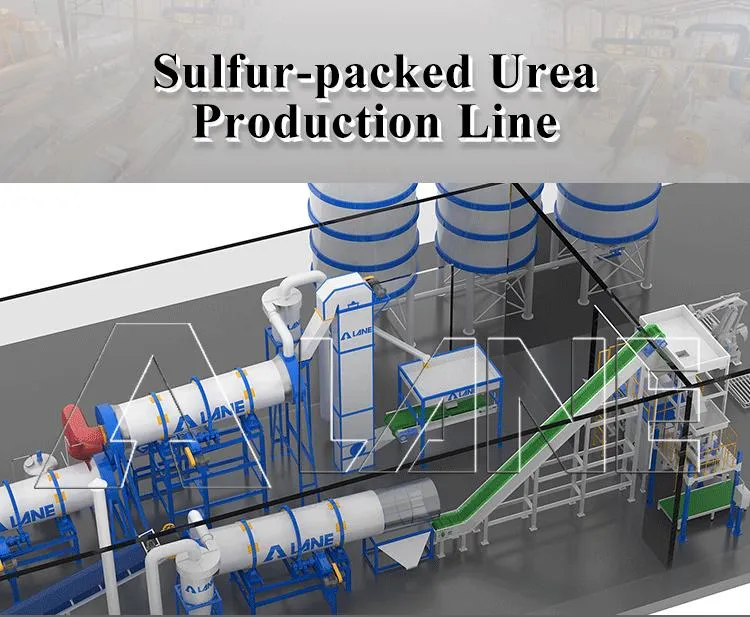
Northern Europe offers opportunities for fertilizer manufacturers looking to explore specialty fertilizers and controlled-release nitrogen products.
For companies in Finland, Sweden, Norway, and Denmark, investing in sulfur-coated urea production equipment can be a strategic option for diversifying fertilizer products and developing additional value-added manufacturing capabilities.
Before selecting equipment, it is important to define the target production capacity, raw material specifications, sulfur coating ratio, final product requirements, and expected investment budget.
LANE Heavy Industry can help you evaluate your project and develop a customized sulfur-coated urea production line solution.