author: Zero Shen
from: LANE Machinery Groups
As modern agriculture demands greater precision in nutrient management, NPK compound fertilizers are becoming increasingly popular worldwide. Compared to compound fertilizers produced through granulation processes, bulk blended fertilizers (BB fertilizers) offer greater flexibility, lower production costs, and faster formulation adjustments.
Particularly in port cities, many fertilizer manufacturers have chosen to establish NPK blending plants due to their transportation advantages. These facilities enable the precise blending of imported fertilizers, allowing them to be sold locally at higher prices.
NPK blending production lines allow manufacturers to produce a variety of customized fertilizer formulations simply by adjusting the ratio of raw materials. This flexibility makes blending production lines an ideal choice for meeting the agricultural needs of different crops, soil conditions, and regions.
This article will introduce the types of NPK fertilizers that Lane’s NPK blending production lines can produce, their common application areas, and how manufacturers can quickly switch between fertilizer formulations.
An NPK blending plant is a fertilizer production system designed to mix granular nitrogen (N), phosphorus (P), and potassium (K) fertilizers in precise proportions.
Unlike a compound fertilizer production line, the raw materials are not chemically reacted or granulated together. Instead, finished fertilizer granules are accurately weighed and blended to create customized NPK formulations.
Typical raw materials include:
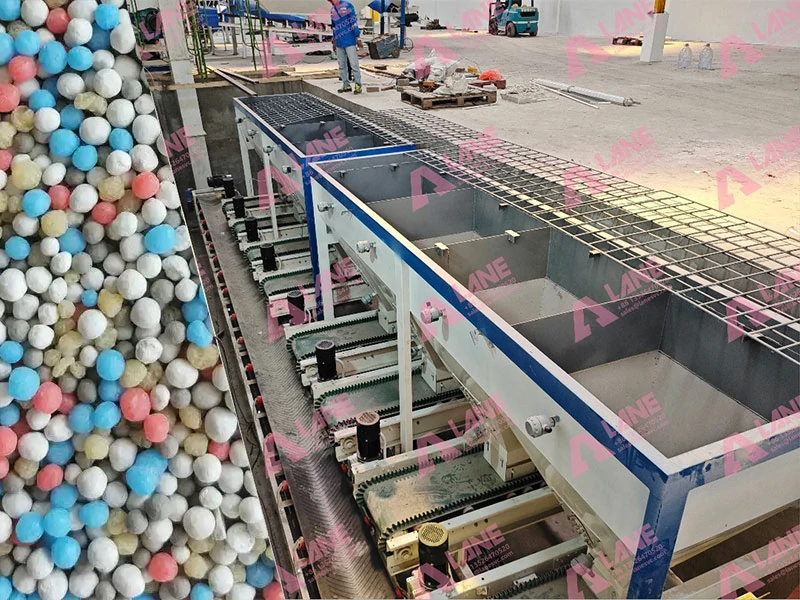
One of the biggest advantages of a BB fertilizer production line is the ability to produce hundreds of fertilizer formulations.
Suitable for:
Characteristics:
Suitable for:
Characteristics:
Suitable for:
Characteristics:
Suitable for:
Characteristics:
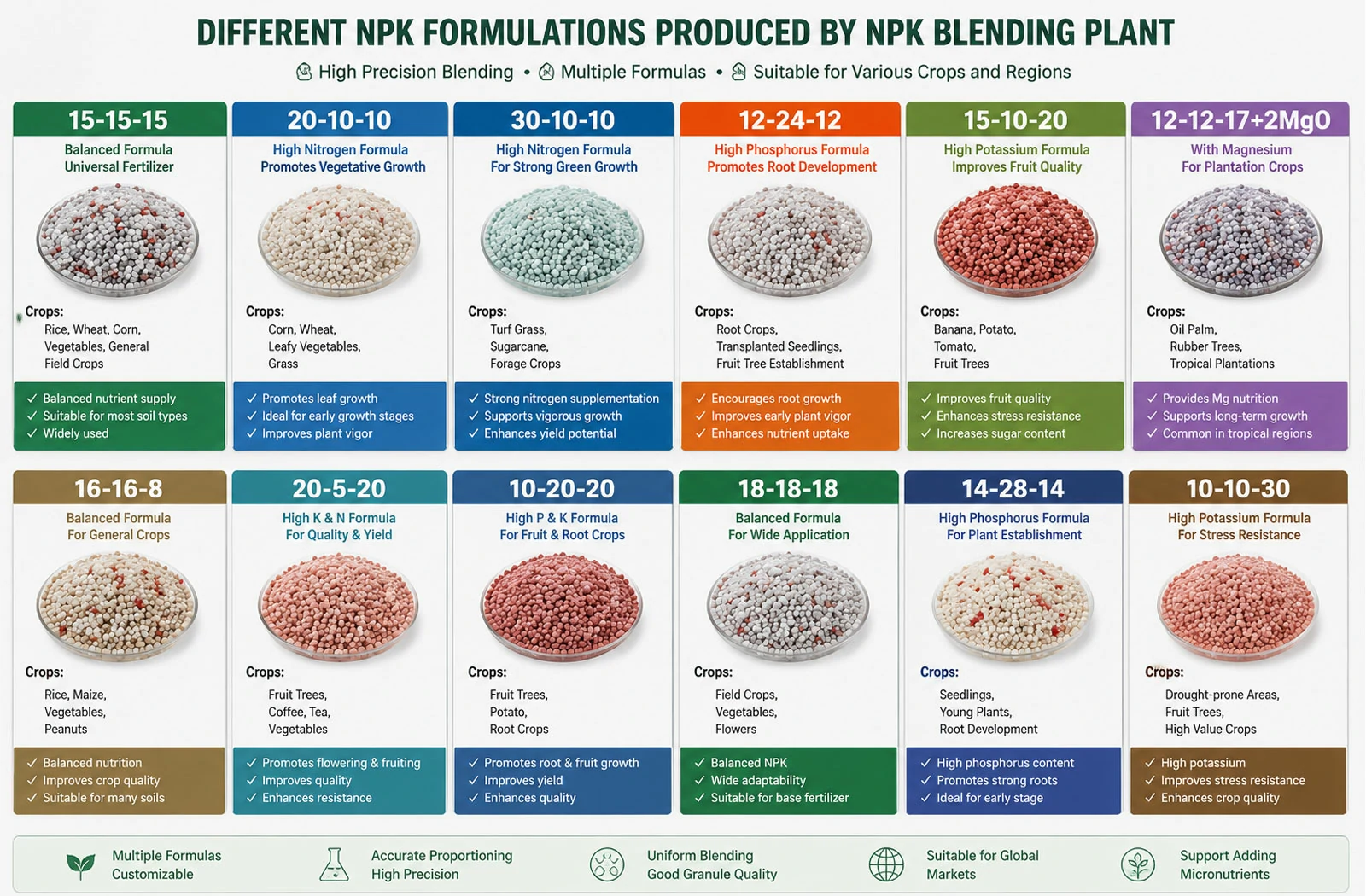
Suitable for:
Characteristics:
Suitable for:
Characteristics:
Different agricultural regions often demand different NPK ratios.
Common formulations:
Major crops:
Common formulations:
Major crops:
Common formulations:
Major crops:
Common formulations:
Major crops:
Yes.
Modern NPK blending plants are designed to produce customized fertilizers according to:
Examples include:
Micronutrients can also be added:
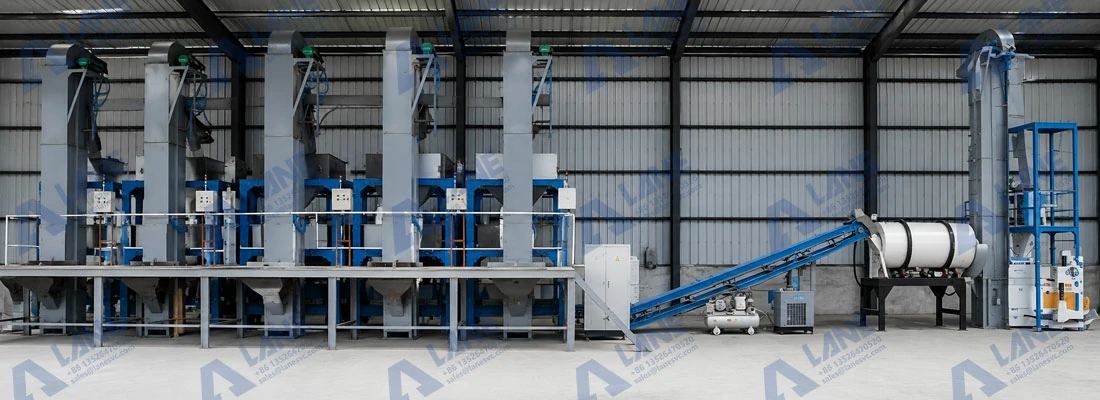
Many customers assume formula changes are complicated. In reality, modern blending plants are designed for fast adjustments.
The process generally includes:
Operators simply input the desired NPK ratio into the control system.
Example:
Current production:
15-15-15
Switch to:
20-10-10
The PLC automatically recalculates material proportions.
The dynamic batching scale automatically modify the feeding quantity of:
Raw materials are delivered to the rotary blender and uniformly mixed.
The finished fertilizer is automatically packed into bags.
The actual switching time depends on plant size and automation level.
Typical switching times:
| Plant Type | Formula Change Time |
|---|---|
| Semi-automatic blending plant | 20–40 minutes |
| Fully automatic blending plant | 5–15 minutes |
| Large-scale continuous plant | 10–20 minutes |
Most of the time is spent clearing residual materials from conveyors and mixers to prevent cross-contamination.

Compared with traditional compound fertilizer production lines, NPK blending plants offer several advantages:
No granulation, drying, or cooling equipment is required.
Hundreds of fertilizer grades can be produced on a single line.
The process requires only weighing, blending, and packaging.
Ideal for serving multiple crops and regional markets.
Capacities commonly range from:
An NPK blending plant provides fertilizer manufacturers with exceptional flexibility. By simply adjusting raw material ratios, producers can manufacture a wide range of NPK fertilizers tailored to different crops, soil conditions, and regional agricultural needs.
Whether producing a universal 15-15-15 fertilizer, a high-nitrogen formula for maize, or a potassium-rich blend for fruit crops, modern BB fertilizer production lines can switch formulations quickly and efficiently, making them one of the most cost-effective fertilizer manufacturing solutions available today.