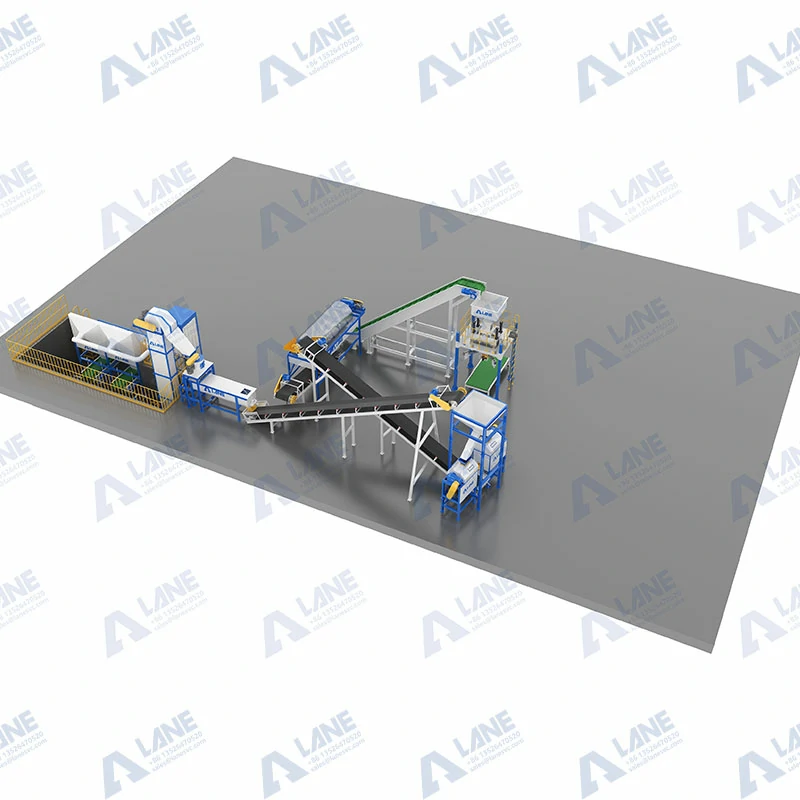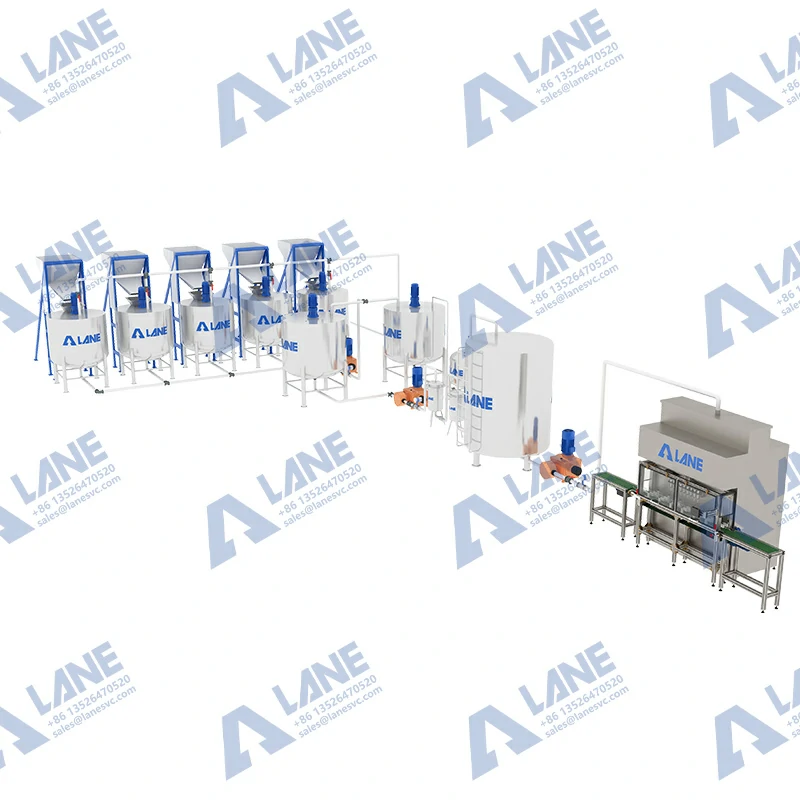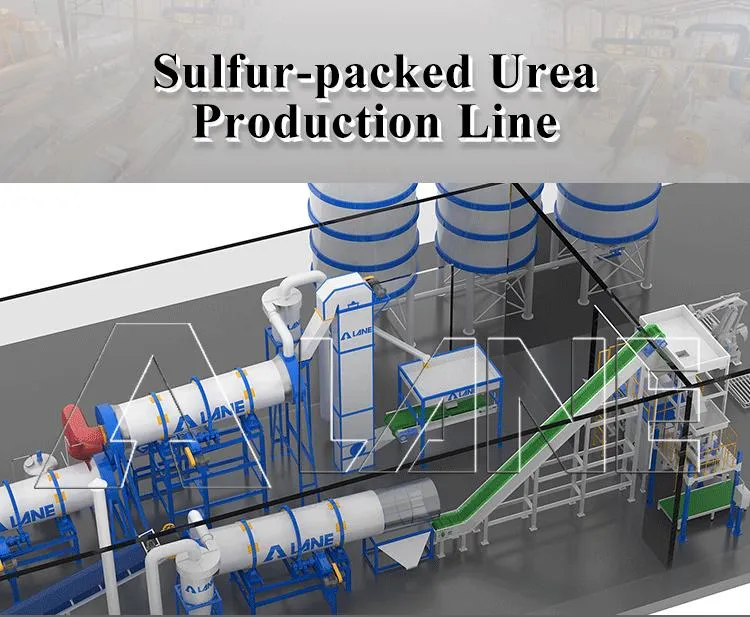
Gypsum (CaSO4⋅2H2O) is one of the most versatile industrial minerals and chemical by-products in the global economy. From agricultural soil conditioning to cement manufacturing and building materials, the global demand for processed calcium sulfate continues to surge. However, ungranulated raw gypsum—especially synthetic by-products such as Flue Gas Desulfurization (FGD) gypsum, phosphogypsum, and citric acid gypsum—presents severe logistical and operational bottlenecks. In its raw, ultra-fine powdered form, gypsum exhibits poor bulk flowability, severe dusting, bridge formation in storage silos, and low bulk density (typically 0.7–0.9 t/m³).
Establishing a modern gypsum granulation plant transforms cohesive, low-value powders into hard, dust-free, and uniform spherical or compacted granules (2.0–4.75 mm) with a bulk density exceeding 1.1–1.25 t/m³. These free-flowing granules can be easily transported, bulk-blended with NPK fertilizers, and broadcast accurately across commercial agricultural fields using standard centrifugal spreaders.
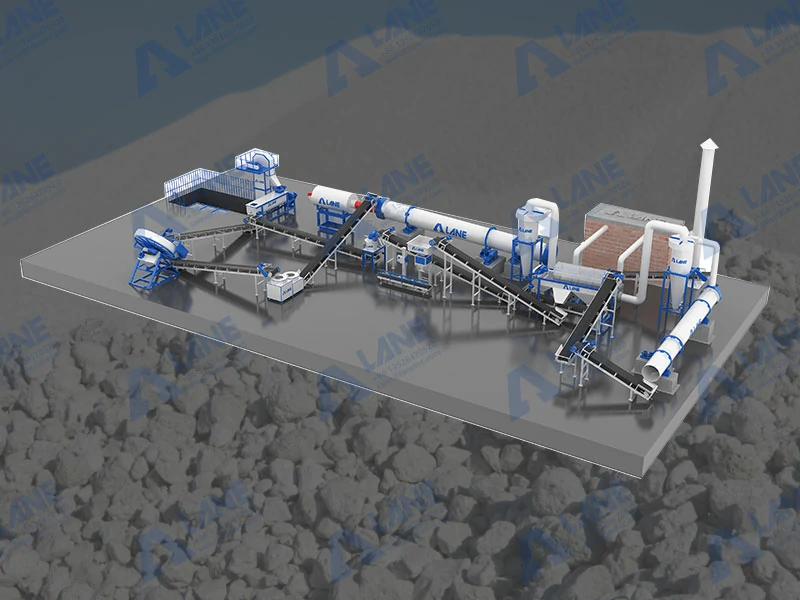
Building a profitable gypsum granulation plant requires a rigorous balance between chemical thermodynamics, mechanical agglomeration, and thermal energy efficiency. This engineering guide outlines the complete technical roadmap for designing, sizing, and commissioning a high-efficiency gypsum granulation plant, detailing machinery selection, binder formulations, process parameters, and project economics.
Before engineering a gypsum granulation plant, the physical and chemical characteristics of the source material must be thoroughly analyzed. Industrial gypsum sources fall into three primary categories:
| Feedstock Category | Origin & Nature | Engineering Challenges & Pre-Treatment |
|---|---|---|
| Natural Mined Gypsum | Sedimentary rock, high purity (CaSO4⋅2H2O>85%) | High initial hardness; requires multi-stage fine crushing & micro-pulverizing (<200 mesh). |
| FGD Gypsum (Synthetic) | Coal-fired power plant desulfurization scrubbing; uniform fine crystals (30–60 μm) | High free moisture (8%–15%), sticky handling, high risk of bridging; requires de-agglomeration and pre-drying. |
| Phosphogypsum | Wet-process phosphoric acid by-product; fine acidic filter cake | Residual free acids (P2O5, F−), trace heavy metals, acidic corrosion; requires neutralization & washing. |
Raw FGD gypsum and chemical by-product cakes often arrive with free moisture levels between 8% and 15%. If introduced directly into granulation units, excessive moisture causes severe agglomerate coalescence, paste formation, and chute plugging. Conversely, natural mined gypsum is dry (<1% moisture) but requires stage-crushing and micro-pulverizing to reach an optimal particle fineness of 85–95% passing 200 mesh (74 μm).
In a wet-process gypsum granulation plant, incoming wet cake must pass through a specialized disintegrator or cage mill to break down caked lumps before entering a flash dryer or rotary conditioning dryer to stabilize feedstock moisture within the target 4%–8% window.
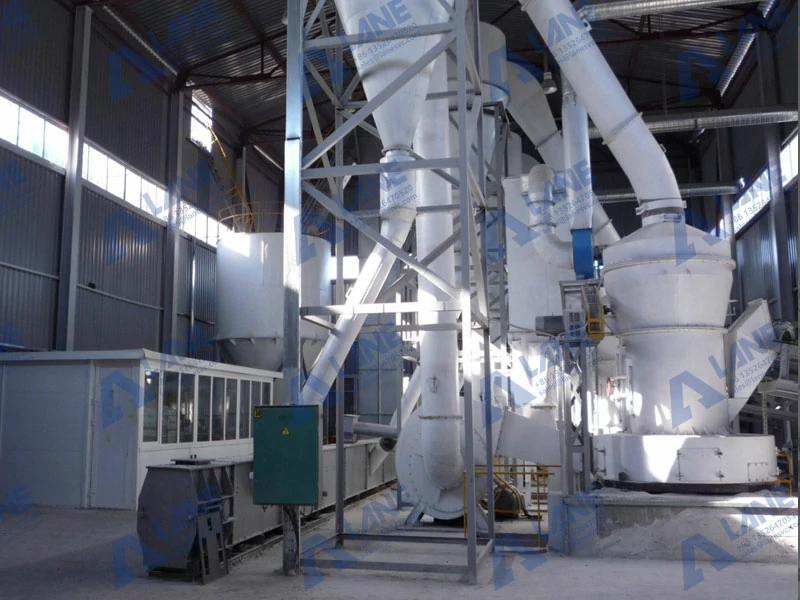
The manufacturing flow of a turn-key gypsum granulation plant operates on a continuous, closed-loop circuit designed to maximize on-size granule yield (>85–90%) while minimizing energy consumption.
Fine gypsum powder is extracted from storage silos using variable-frequency drive (VFD) live-bottom screw feeders and discharged into continuous gravimetric loss-in-weight belt weighers. The dosing accuracy must be maintained within ±0.5% to ensure stable chemistry, particularly when co-formulating granulated gypsum with micronutrients (such as elemental sulfur, boron, zinc) or organic humic acids.
Because pure gypsum lacks intrinsic plastic binding properties, high-strength agglomeration in a gypsum granulation plant requires liquid or dry binder integration. Common industrial binders include:
Feedstock powder and atomized liquid binder converge in the primary gypsum granulation plant. Micro-nucleation occurs as fine particles collide, forming seed granules that grow through continuous layering and capillary coalescence.
Wet green pellets leaving the granulator carry a moisture content of 12%–16% and exhibit low mechanical strength (<8 N/pellet). In a gypsum granulation plant, thermal drying is a delicate thermodynamic operation. The drying air temperature must be precisely controlled to avoid inadvertent phase transition from calcium sulfate dihydrate (CaSO4⋅2H2O) to calcium sulfate hemihydrate (CaSO4⋅0.5H2O, Plaster of Paris) or insoluble anhydrite (CaSO4).
Dried granules leave the rotary dryer at approximately 65∘C–75∘C and must be rapidly cooled to below 40∘C in a counter-current rotary cooler. Cooling prevents condensation and moisture migration during subsequent storage and packaging, which would otherwise induce severe post-bagging caking.
Cooled granules enter high-frequency vibrating screens or heavy-duty rotary trommel screens configured with double decks:
In a well-balanced gypsum granulation plant, the internal recycle ratio is typically held between 1:0.8 and 1:1.5.
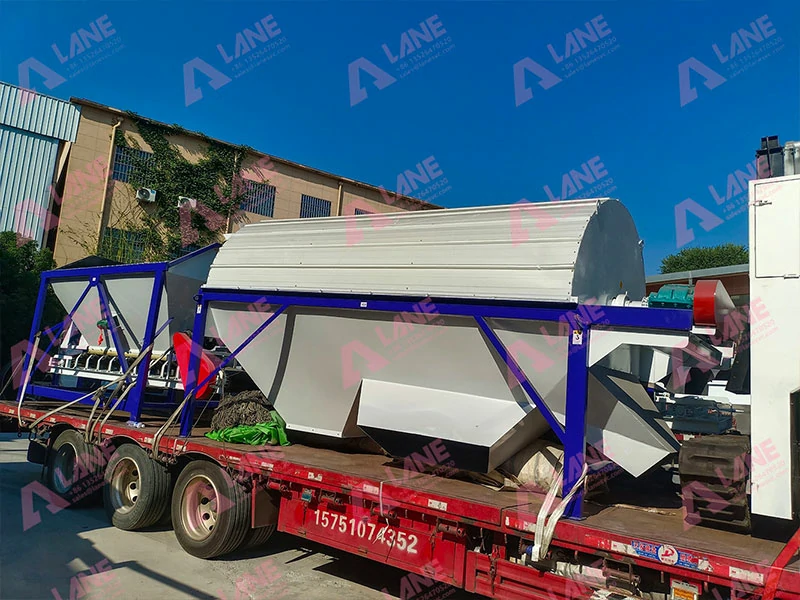
On-size granules enter a rotary coating drum where an anti-caking amine oil or mineral oil surfactant (0.1%–0.3%) and a fine talc/diatomite parting powder (0.2%–0.5%) are applied. The finished product is then conveyed to automated valve-bag packaging machines or 1-ton jumbo bag filling stations.
Selecting the optimal equipment configuration determines the operational stability, yield, and thermal efficiency of your gypsum granulation plant.
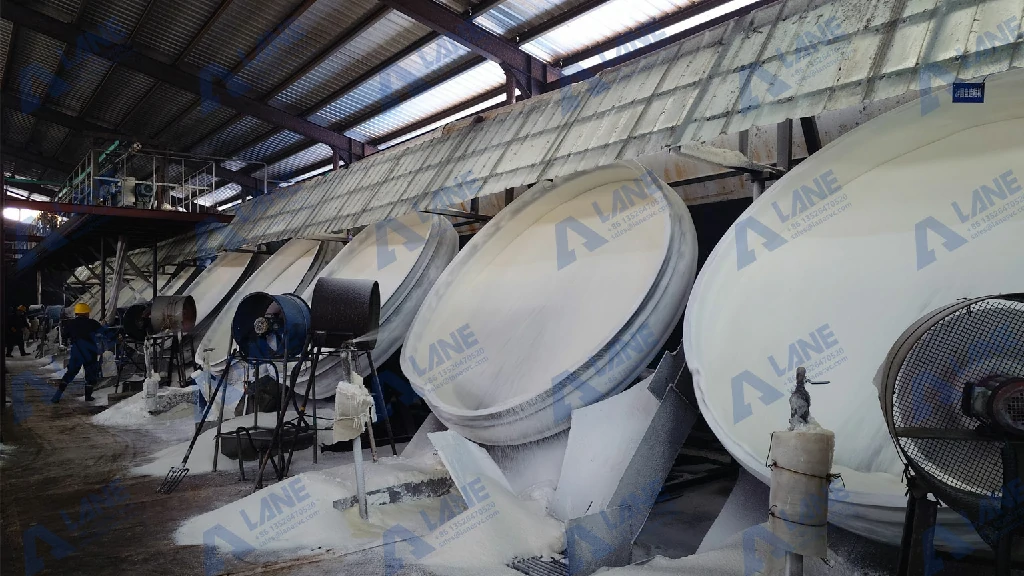
For premium agricultural grade soil amendments, the Disc/Pan Granulator is the industry standard in a gypsum granulation plant due to its self-classifying nature and superior pellet sphericity.
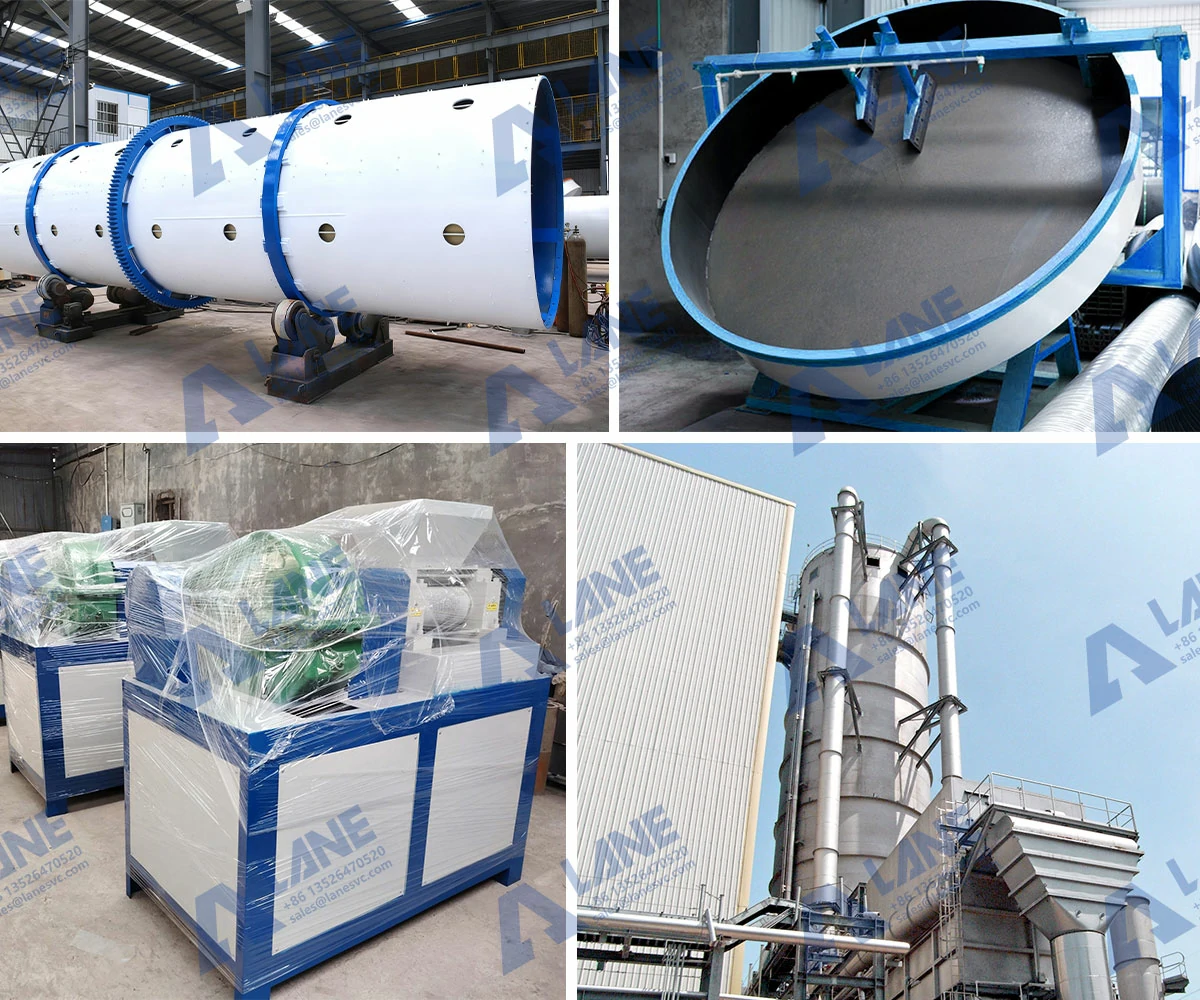
The following table outlines the complete machinery line-up required for a standard 10–12 t/h commercial gypsum granulation plant:
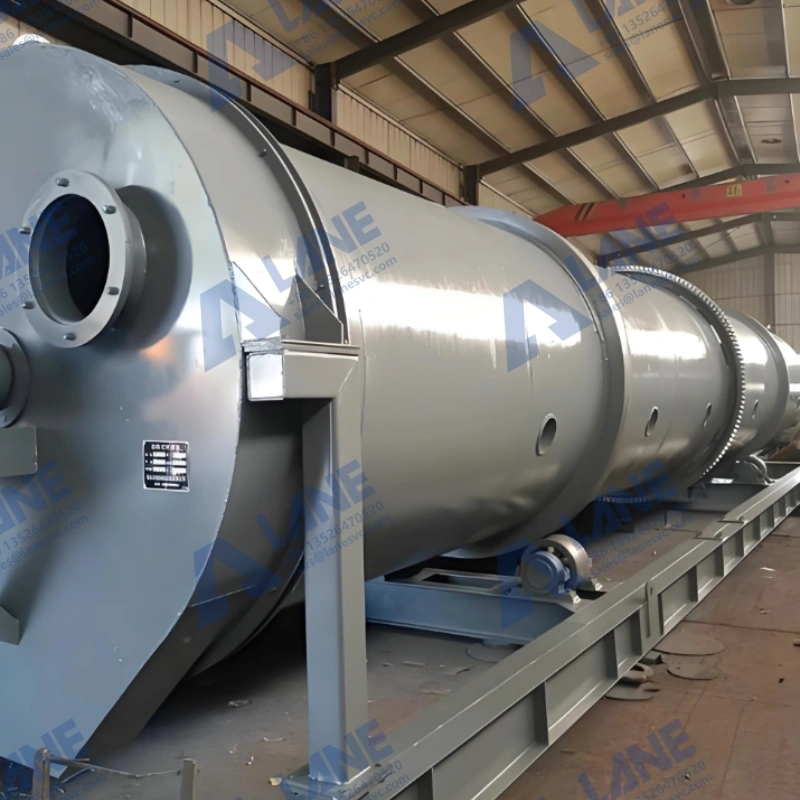
Operating a successful gypsum granulation plant requires strict control over physical, mechanical, and thermal variables. Deviations in feedstock moisture or drying temperatures can rapidly lead to production shutdowns or substandard granule hardness.
| Process Variable | Target Engineering Range | Potential Operational Risk if Out of Range | Corrective Control Strategy |
|---|---|---|---|
| Feedstock Particle Size | 85% passing 200 mesh (74 μm) | Coarse particles (>100 μm) cause weak granules and surface dusting | Inspect and adjust upstream pulverizer or disintegrator cage clearances |
| Pan Granulator Tilt Angle | 45∘–52∘ (Adjustable) | Incorrect angle alters retention time and broadens size distribution | Steep angle for smaller granules; shallow angle for larger retention |
| Pan Rotational Speed | 14–18 RPM (Froude No. 0.4–0.6) | Centrifugal force overpowers gravity, causing wall plastering | Modulate VFD to maintain stable cascading bed dynamics |
| Granulation Water/Binder Dosing | 12.0%–15.5% total moisture | <12%: excessive dust; >16%: mud balls and catastrophic chute blockages | Link liquid flowmeters directly to loss-in-weight solid feed signals |
| Dryer Inlet Gas Temp | 190∘C–240∘C | >280∘C: thermal decomposition of dihydrate to hemihydrate | Automate cold-air dilution dampers on the burner combustion chamber |
| Dryer Material Discharge Temp | 65∘C–75∘C | >85∘C: crystal lattice water loss; <60∘C: incomplete drying | Adjust dryer induced-draft damper and burner firing rate |
| Finished Pellet Hardness | ≥25–35 N/granule (3 mm pellet) | <20 N: granule attrition and dust breakdown during bulk transport | Increase lignosulfonate binder ratio or improve raw grinding fineness |
| Screening Efficiency | ≥90% within 2.0–4.75 mm | Blinding of screen decks increases internal circulating load | Install ultrasonic de-blinding transducers or bouncing rubber balls |
Designing the civil and structural layout of a commercial gypsum granulation plant involves optimizing material gravity flow while providing sufficient access for heavy maintenance.
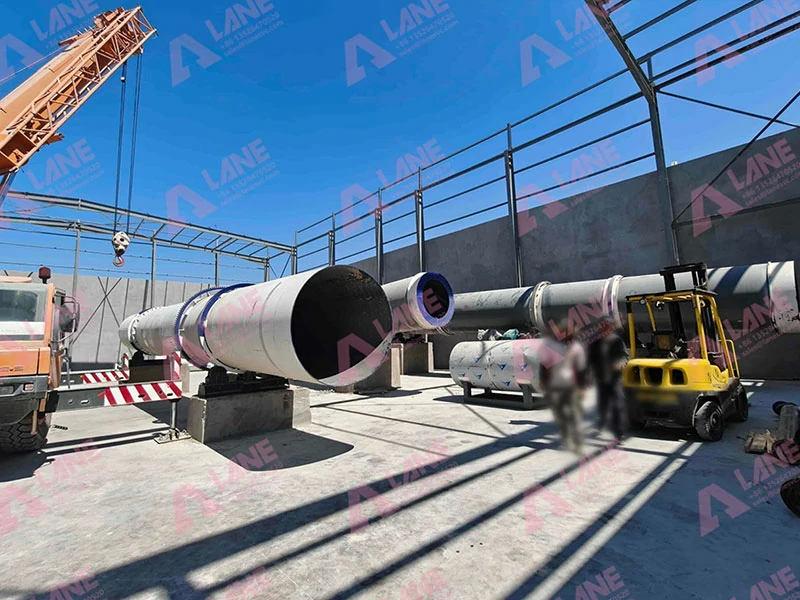
An investment in a high-capacity gypsum granulation plant offers attractive unit margins, particularly when monetizing low-cost industrial by-products (such as FGD gypsum or phosphogypsum) into premium bagged agricultural sulfur-calcium fertilizer pellets.
| Investment Category | Estimated Budget (USD) | Share (%) | Scope of Supply |
|---|---|---|---|
| Core Processing & Drying Equipment | 450,000−630,000 | 50% | Feeders, mixers, pan granulators, rotary dryer/cooler, screens |
| Civil Foundations & Steel Platforms | 120,000−180,000 | 15% | Concrete footings, support towers, maintenance platforms |
| Dust Collection & PLC Automation | 120,000−175,000 | 15% | Cyclones, pulse-jet baghouse filter, central SCADA cabinet |
| Freight, Commissioning & Working Capital | 170,000−215,000 | 20% | On-site installation, trial run, initial spare parts & binders |
| Total Turnkey CAPEX | 860,000−1,200,000 | 100% | Complete 50,000 TPA Turnkey Facility |
| Expense / Profit Item | Cost per Ton (USD) | 50,000 TPA Plant Annual (USD) |
|---|---|---|
| Raw Gypsum & Binders | 10−20 | 500,000−1,000,000 |
| Energy (Fuel & Power) | 10−15 | 500,000−750,000 |
| Labor, Bags & Maintenance | 10−15 | 500,000−750,000 |
| Total Production Cost (OPEX) | 30−50 / ton | 1,500,000−2,500,000 |
| Wholesale Market Price | 90−130 / ton | 4,500,000−6,500,000 |
| Gross Operating Profit | 50−80 / ton | 2,500,000−4,000,000 |
| Estimated Payback Time | 4 – 8 Months | Based on turnkey investment |
During regular commissioning and operations of a gypsum granulation plant, operators frequently encounter process anomalies. The matrix below provides rapid diagnostic and corrective procedures:
| Operational Symptom | Root Cause Mechanism | Immediate Engineering Remedy |
|---|---|---|
| Pellets crushing too easily (<15 N) | Inadequate binder proportion; excessive drying temperature causing crystal calcination; coarse grinding | Increase binder concentration by 0.5%; lower dryer inlet temperature; verify raw gypsum <74 μm (>85%). |
| Severe mud buildup on pan granulator disc | Liquid spray nozzles positioned too close to the scraper blade; scraper clearance >5 mm | Re-position spray manifold to the 12 o’clock cascading zone; readjust ceramic scraper tolerance to 2–3 mm. |
| High recycle ratio (>1.8:1) | Over-wetting causing massive lumps or under-wetting producing excessive ungranulated dust | Fine-tune water-to-solid ratio; adjust pan angle by +2∘ to accelerate discharge of target 3 mm seed pellets. |
| Granules caking and clumping in warehouse | High product packaging moisture (>1.5%); bagging temperature >45∘C; missing anti-caking agent | Increase cooling air volume; verify dryer outlet moisture <0.8%; ensure anti-caking oil coating drum is operating. |
| Baghouse filter blinding & high differential pressure | Flue gas temperature dropping below the acid/water dew point (<65∘C); bag condensation | Insulate baghouse hopper; pre-heat baghouse before feeding; ensure pulse-jet compressed air is completely dried and oil-free. |
Answer: Yes. A properly designed gypsum granulation plant can handle both feedstocks, provided an upstream drying/disintegrating unit is installed for moist FGD gypsum cakes and a fine pulverizing mill is integrated for mined rock gypsum. The core mixing, pan granulation, drying, and screening systems remain identical.
Answer: Gypsum in its natural and soil-beneficial state is calcium sulfate dihydrate (CaSO4⋅2H2O). When exposed to material temperatures above 95∘C–105∘C, it loses 75% of its bound crystalline water and converts into hemihydrate (CaSO4⋅0.5H2O). If this occurs inside the dryer, the granules will absorb ambient moisture and harden into rock-solid clumps inside storage bags. Keeping dryer exit material temperatures below 75∘C preserves the dihydrate structure.
Answer: Because gypsum is relatively soft (Mohs hardness 1.5–2.0), abrasive wear on major machinery is moderate compared to silica or limestone processing. Pan granulator ceramic scraper blades typically last 10–14 months, disintegrator cage pins last 6–9 months, and stainless woven screen meshes require replacement every 4–6 months under continuous 24/7 industrial operations.
Answer: Modern environmental regulations require particulate matter (PM) emissions of less than 10–20 mg/Nm3. By combining high-efficiency multi-cyclone pre-separators with an automated pulse-jet baghouse filter equipped with PTFE-membrane filter media, a modern gypsum granulation plant operates well within strict EPA and European environmental limits.
Building a high-performance gypsum granulation plant represents one of the most profitable circular-economy investments in the mineral processing and fertilizer sectors. Transforming wet, powdery industrial by-products into premium, free-flowing agricultural granules creates substantial economic value while solving pressing industrial waste disposal problems.
To ensure long-term commercial success, project investors must prioritize:
Working with LANE, an experienced engineering, procurement, and construction (EPC) partner, ensures a seamless transition for your project—from the initial plant layout to the final commissioning and operator training.