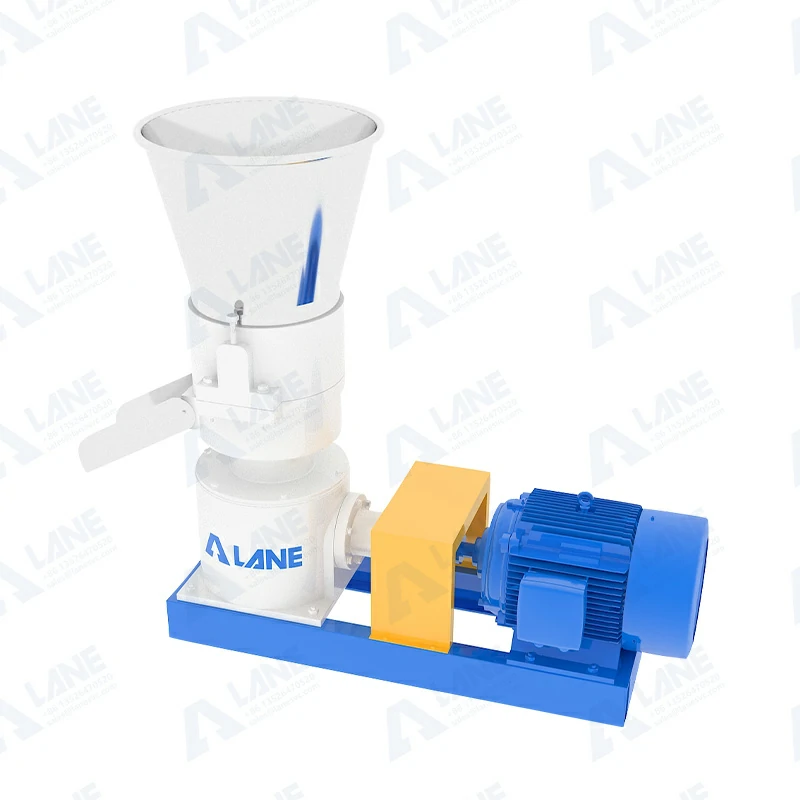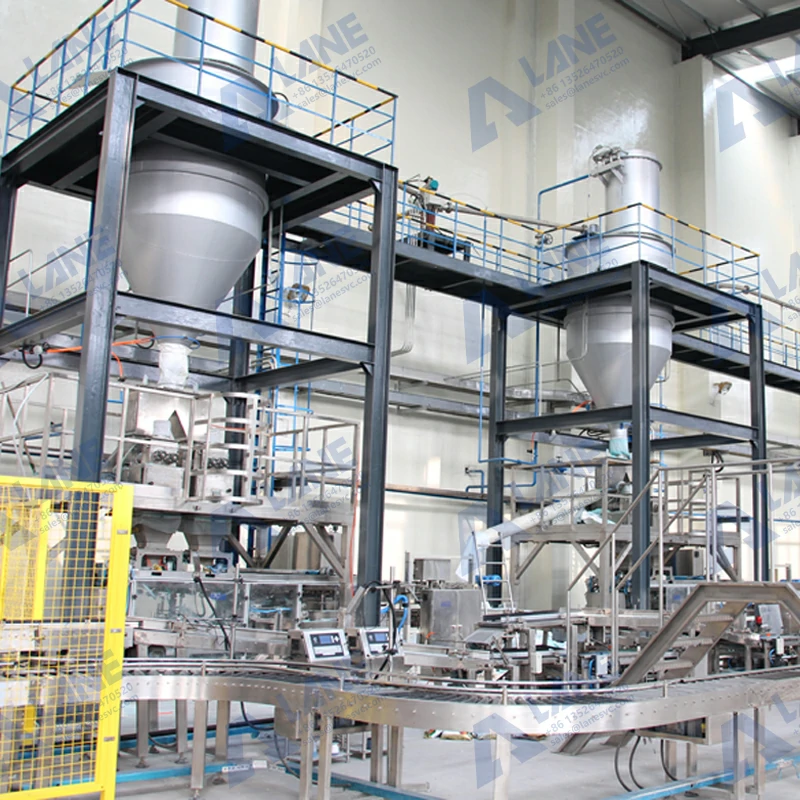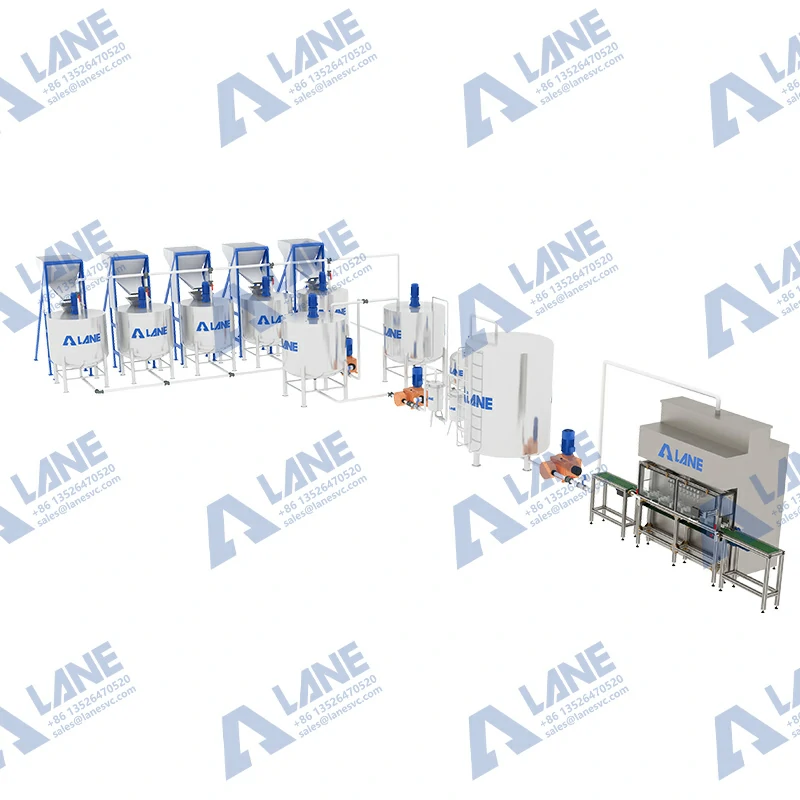
A modern LECA production line is a complete industrial system designed to manufacture lightweight expanded clay aggregate through high-temperature expansion technology. LECA, also known as lightweight ceramsite or expanded clay pellets, has become an increasingly important material in construction, horticulture, hydroponics, insulation engineering, and environmental projects because of its low density, porous structure, and excellent thermal insulation performance.
With the continuous growth of green construction materials and sustainable building technologies, more investors are focusing on the development of high-efficiency LECA production line. Compared with traditional stone aggregates, LECA products offer significant advantages in weight reduction, thermal resistance, sound insulation, and water retention capacity. These characteristics make LECA an ideal solution for lightweight concrete production, rooftop gardening systems, hydroponic planting, prefabricated wall panels, and modern landscaping applications.
The lightweight expanded clay aggregate production line designed by LANE covers the entire production process, including raw material preparation, crushing, mixing, granulation, drying, rotary kiln calcination, cooling, screening, packaging, and dust collection systems.
Each process plays a critical role in determining the quality, density, strength, and expansion of the final lightweight aggregate product.
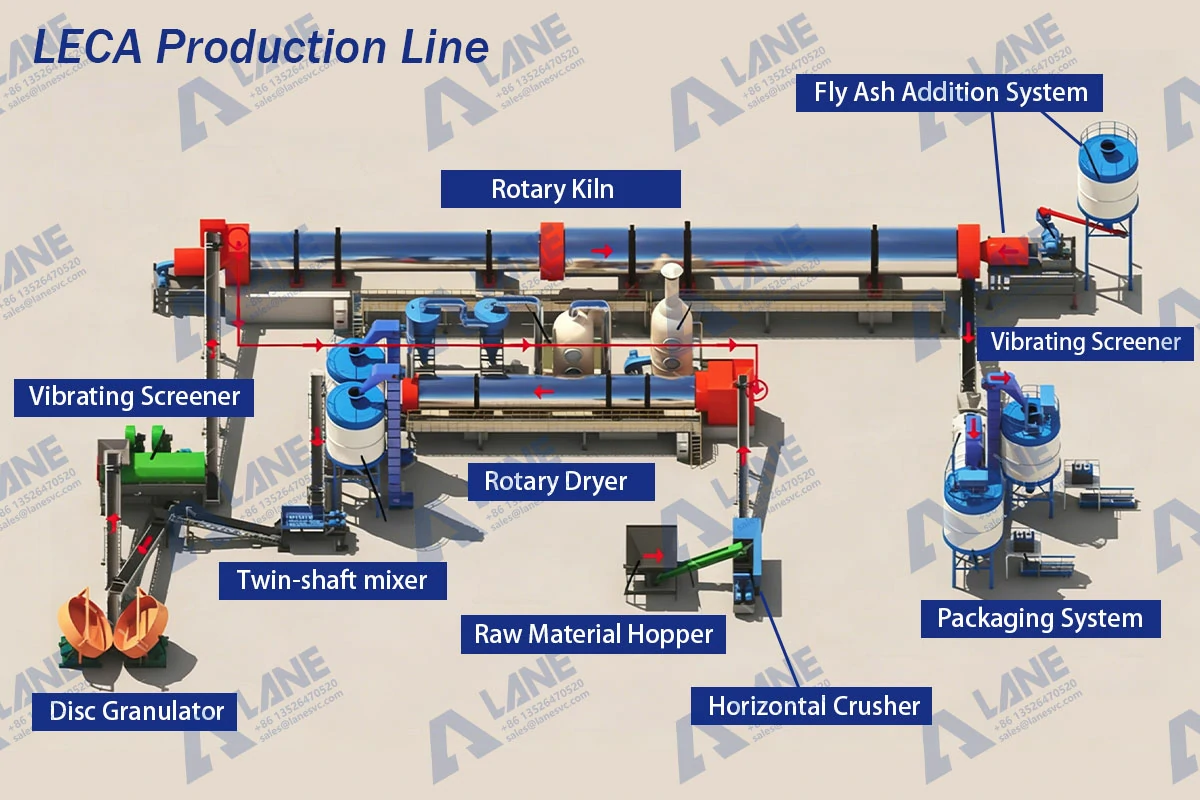
The raw material preparation section is the foundation of the entire LECA manufacturing process. The stability of raw material composition directly affects pellet expansion performance, firing stability, and finished product quality. In industrial LECA production line, manufacturers commonly use clay, shale, sludge, fly ash, river sediment, and various industrial solid wastes as primary raw materials.
Different raw materials require different moisture content adjustments and pretreatment methods. For example, the natural moisture content of clay typically ranges from 18% to 30%, while that of sludge-based raw materials may exceed 60%.
Therefore, before entering the LECA production line, raw materials with high moisture content require additional dewatering treatment. Proper homogenization ensures a stable chemical composition and prevents fluctuations during the high-temperature calcination process.
If you are unsure whether your raw materials are suitable for our LECA production process, LANE will provide free raw material testing and formula adjustments to ensure a smooth production process.
To guarantee continuous production efficiency, the raw material preparation system normally uses automated feeding equipment and storage hoppers. These systems not only reduce labor costs but also improve production stability and ensure accurate material transportation between different sections of the LECA production line
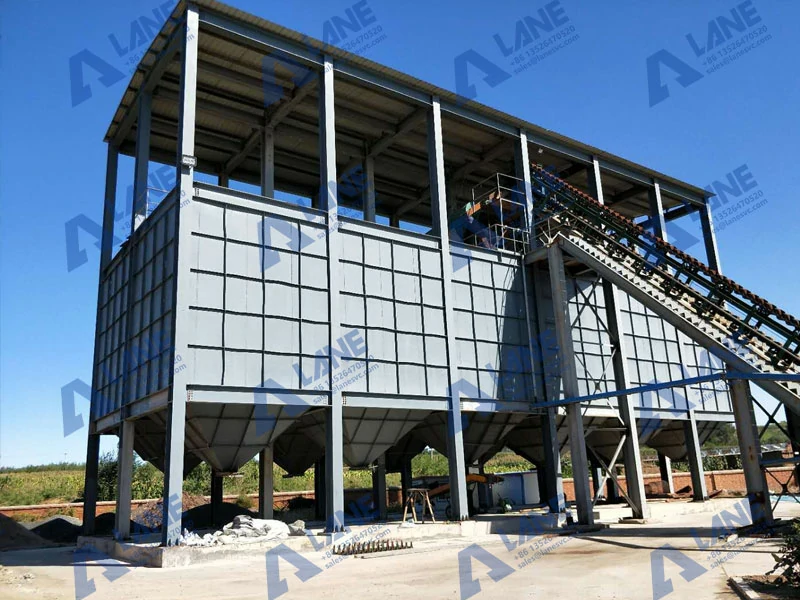
The raw material hopper is mainly used for temporary storage and controlled feeding of clay or other raw materials. A stable feeding rate is extremely important because inconsistent feeding may cause unstable kiln temperature and uneven pellet expansion during the calcination stage.
| Model | Capacity(tph) | Silo Size(m) | Silo Thickness(mm) | Overall Size(mm) | Breaking Motor Power(kw) | Vibration Motor Power(kw) | Conveyor Width(mm) | Conveyor Power(kw) | Mixing Shaft Diameter(mm) | Mixing Shaft Length(mm) |
| LAH-1-2 | 5-10 | 1*2 | 4 | 2250*1050*1590 | 0.75 | 0.37 | 500 | 3 | 60 | 2 |
| LAH-1.5-3 | 7-12 | 1.5*3 | 4 | 3250*1550*1720 | 0.75 | 0.37 | 650 | 4 | 60 | 3 |
| LAH-2-3 | 9-15 | 2*3 | 5 | 4250*1550*1720 | 0.75 | 0.37 | 650 | 4 | 60 | 3 |
| LAH-2-4 | 12-17 | 2*4 | 5 | 4250*2050*1850 | 0.75 | 0.37 | 800 | 4 | 76 | 4 |
After raw materials are prepared, large blocks of clay or shale must be crushed into smaller particles suitable for granulation. The crushing process significantly influences pellet formation quality and the efficiency of the subsequent expansion process inside the rotary kiln.
If the particle size is too large, pellets may crack during drying or fail to expand uniformly under high temperatures. On the other hand, excessively fine powder may reduce pellet strength and increase dust generation throughout the production process. Therefore, most LECA manufacturing plants control the crushed particle size within 5 mm to achieve the best balance between granulation performance and kiln expansion efficiency.
The crushing section usually adopts heavy-duty hammer crushers because they provide high crushing efficiency, simple structure, and excellent adaptability to sticky clay materials. For large-capacity LECA production lines, multiple-stage crushing systems may also be installed to improve production stability and reduce equipment wear.
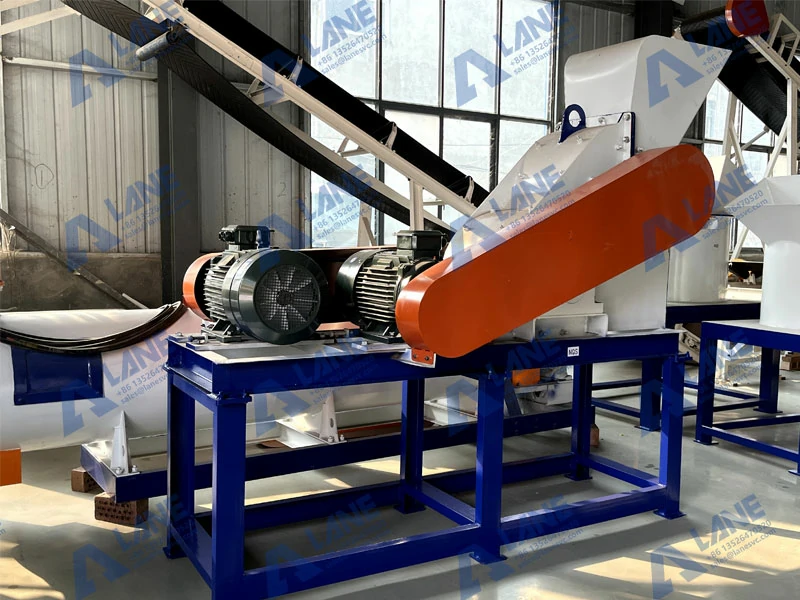
The hammer crusher is capable of crushing wet or dry clay materials into fine particles with uniform size distribution. This equipment is widely used because of its high throughput capacity and strong adaptability to various mineral materials.
| Model | Capacity(tph) | Power(kw) | Overall Size(mm) | Number Of Hammers | Hammer Weight(kg) | Weight(t) |
| LACD-400*400 | 5-10 | 7.5+7.5 | 2200*900*1200 | 24 | 2.5 | 0.6 |
| LACD-600*400 | 10-15 | 18.5+18.5 | 2600*950*1500 | 24 | 3.5 | 1 |
| LACD-600*600 | 15-20 | 22+22 | 2600*1170*1500 | 40 | 3.5 | 1.3 |
| LACD-600*800 | 20-30 | 30+22 | 2800*1350*1700 | 48 | 3.5 | 1.8 |
| LACD-800*600 | 30-40 | 45+37 | 3200*1250*2000 | 40 | 8 | 3 |
| LACD-800*800 | 40-50 | 55+45 | 3200*1400*2000 | 48 | 8 | 3.5 |
| LACD-1000*800 | 50-60 | 55+75 | 3950*1750*2280 | 48 | 10 | 5.5 |
| LACD-1000*1000 | 60-90 | 90+75 | 4000*1900*2400 | 52 | 10 | 7 |
The mixing and homogenization stage is one of the most important steps for ensuring stable pellet quality in a LECA production line. During this process, crushed materials are mixed with water and additives to improve plasticity, pellet formation capability, and expansion performance during firing.
Some clients also add lime powder, bentonite, or industrial binders to enhance pellet strength and optimize internal pore structure after calcination. Proper moisture control is especially critical because excessive water may lead to pellet collapse during drying, while insufficient moisture can reduce granulation efficiency and pellet uniformity.
A high-quality mixing system helps maintain consistent raw material composition, reduces segregation problems, and improves the stability of the rotary kiln firing process. For large industrial projects, continuous automatic mixers are generally preferred to ensure uninterrupted operation and lower maintenance requirements.
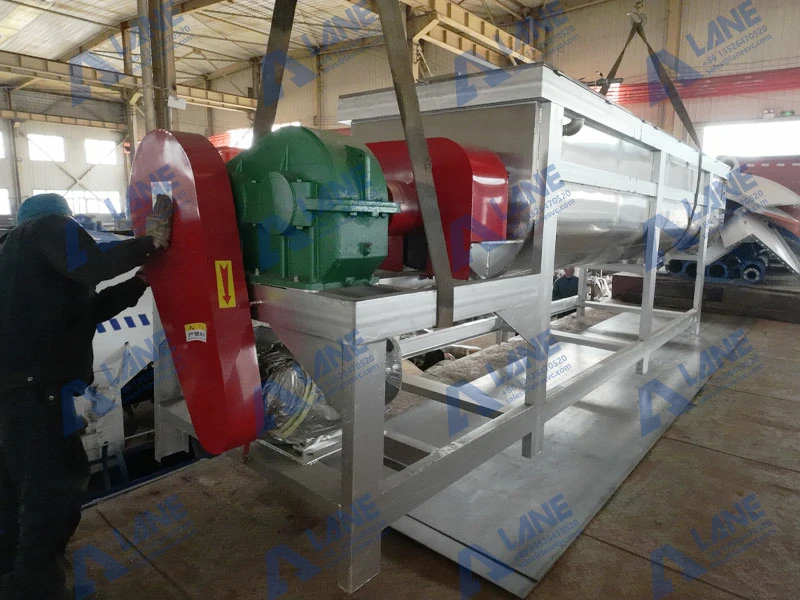
Double shaft mixers provide intensive mixing performance and excellent moisture distribution capability. Their strong mixing action ensures that all raw materials are evenly blended before entering the granulation section.
| Model | Capacity(tph) | Drum Size(mm) | Size(mm) | Power(kw) | Drum Volume(m³) | Mixing Shaft Size(mm) |
| LAM-0830D | 6-10T/H | 800*3000 | 3950*1650*800 | 18.5 | 1.6 | 102*8 |
| LAM-0840D | 8-12T/H | 800*4000 | 4950*1650*800 | 18.5 | 2.1 | 102*8 |
| LAM-1040D | 10-14T/H | 1000*4000 | 4950*2050*1000 | 22 | 2.6 | 118*10 |
| LAM-1050D | 12-16T/H | 800*4000 | 5950*2050*1000 | 22 | 3.3 | 133*14 |
| LAM-1240D | 12-16T/H | 1200*4000 | 5150*1960*1160 | 30 | 3.1 | 159*17.5 |
| LAM-1250D | 14-18T/H | 1200*5000 | 6150*2250*1200 | 30 | 3.9 | 159*17.5 |
| LAM-1550D | 16-20T/H | 800*4000 | 6600*2200*1250 | 30 | 4.9 | 219*20 |
| LAM-1560D | 18-22T/H | 800*4000 | 7250*2500*1500 | 30 | 5.9 | 219*20 |
Granulation is the core forming process in the LECA production line. During this stage, fine powder materials are transformed into round pellets with uniform particle size and suitable mechanical strength for high-temperature calcination.
The quality of granulation directly affects the final shape, density, and compressive strength of LECA products. Uniform pellets allow heat to distribute evenly inside the rotary kiln, which improves expansion consistency and reduces the generation of broken particles.
Most LECA production lines use disc granulators because they offer flexible pellet size adjustment, high granulation efficiency, and simple operation. By adjusting the disc angle, rotational speed, and moisture content, manufacturers can produce pellets ranging from 5 mm to 25 mm depending on different application requirements.
For hydroponic LECA products, smaller and more uniform pellets are generally preferred, while construction-grade lightweight aggregates may require larger particle sizes and higher compressive strength.
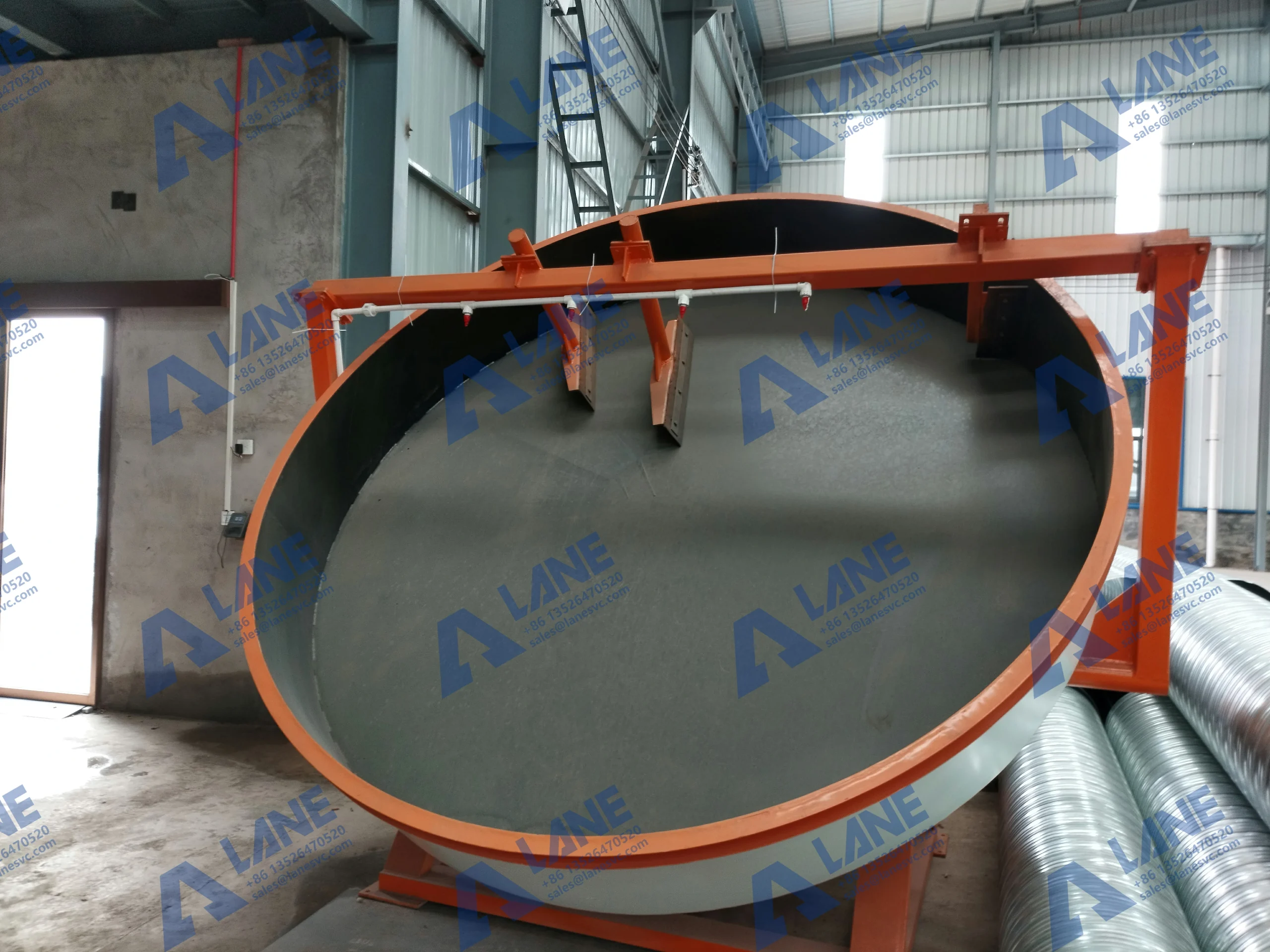
The disc granulator uses centrifugal force and rolling action to gradually form spherical pellets. This equipment is widely used in lightweight aggregate and fertilizer industries because of its stable operation and adjustable pellet formation capability.
| Model | Capacity(tph) | Size(mm) | Power(kw) | Rotation Speed(rpm) | Pan Diameter(mm) | Tilt Angle(°) |
| LAZD-500 | 0.05-0.1 | 650*600*800 | 0.75 | 32 | 500 | 35-55 |
| LAZD-1000 | 0.1-0.2 | 1800*1200*1600 | 3 | 25 | 1000 | 35-55 |
| LAZD-1200 | 0.2-0.4 | 2000*1400*1950 | 3 | 22 | 1200 | 35-55 |
| LAZD-1500 | 0.4-0.6 | 2200*1800*2050 | 4 | 20 | 1500 | 35-55 |
| LAZD-1800 | 0.6-0.8 | 2600*2000*2450 | 5.5 | 16 | 1800 | 35-55 |
| LAZD-2000 | 0.8-1 | 2900*2100*2750 | 7.5 | 16 | 2000 | 35-55 |
| LAZD-2200 | 1-1.5 | 2530*2100*2800 | 7.5 | 18 | 2200 | 40-50 |
| LAZD-2500 | 1.5-2 | 2630*2600*2800 | 7.5 | 16.2 | 2500 | 40-50 |
| LAZD-2800 | 2-3 | 2850*3020*3110 | 7.5 | 14.2 | 2800 | 40-50 |
| LAZD-3200 | 3-4 | 3600*3030*3310 | 11 | 13.5 | 3200 | 40-50 |
| LAZD-4000 | 4-5 | 4500*3300*4000 | 15 | 12.3 | 4000 | 45 |
| LAZD-4500 | 5-6 | 5100*3700*4400 | 22 | 10 | 4500 | 45 |
| LAZD-6000 | 6-10 | 6400*5000*6000 | 75 | 8.9 | 6000 | 45 |
Freshly formed LECA pellets usually contain a large amount of moisture. If these wet pellets directly enter the rotary kiln, rapid evaporation may cause cracking, bursting, or unstable expansion. Therefore, a drying process is necessary before calcination.
The drying system reduces pellet moisture to below 10%, improving thermal stability during firing. Proper drying also helps lower fuel consumption inside the rotary kiln because less energy is required for moisture evaporation.
Rotary dryers are commonly selected for LECA production line because they provide continuous operation, uniform heating, and strong adaptability to different pellet sizes. Depending on production capacity and fuel availability, the heat source may include coal, natural gas, diesel, biomass, or waste heat recovery systems.
Efficient drying systems not only improve production quality but also increase the overall energy efficiency of the LECA manufacturing plant.
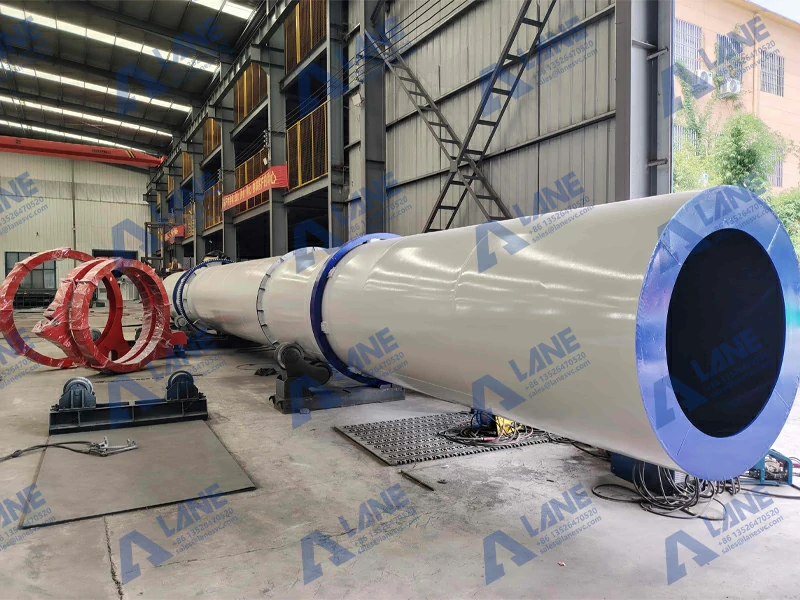
The rotary dryer continuously rotates while hot air passes through the drum, allowing moisture to evaporate evenly from the pellet surface and internal structure.
| Model | Capacity(tph) | Drum Size(mm) | Rotation Speed(r/min) | Steel Plate Thickness(mm) | Lift Plate Thickness(mm) | Power(kw) |
| LARD0808 | 1-2 | Φ800*8000 | 5 | 8 | 4 | 5.5 |
| LARD1010 | 2-3 | Φ1000*10000 | 5 | 10 | 6 | 5.5 |
| LARD1212 | 3-5 | Φ1200*12000 | 5 | 10 | 6 | 7.5 |
| LARD1515 | 5-8 | Φ1500*15000 | 5 | 12 | 6 | 15 |
| LARD1616 | 8-12 | Φ1600*16000 | 5 | 12 | 6 | 18.5 |
| LARD1818 | 12-15 | Φ1800*18000 | 4 | 14 | 6 | 22 |
| LARD2020 | 20-25 | Φ2000*20000 | 4 | 14 | 6 | 37 |
| LARD2222 | 25-30 | Φ2200*22000 | 4 | 16 | 6 | 37 |
| LARD2424 | 30-35 | Φ2400*24000 | 4 | 16 | 6 | 45 |
| LARD2626 | 35-40 | Φ2600*26000 | 3 | 18 | 6 | 55 |
| LARD2828 | 40-45 | Φ2800*28000 | 3 | 18 | 6 | 75 |
| LARD3028 | 45-50 | Φ3000*28500 | 3 | 18 | 6 | 90 |
The rotary kiln is the most critical equipment in the entire LECA production line because it determines the final expansion effect and product quality. During high-temperature firing, pellets undergo complex physical and chemical reactions that generate internal gas expansion and create the porous ceramic structure characteristic of lightweight expanded clay aggregate.
Typical firing temperatures range from 1050°C to 1250°C. Under these conditions, organic matter inside the pellets decomposes and generates gases. As the outer surface gradually vitrifies, internal gas pressure causes the pellets to expand and form a honeycomb-like porous structure.
The stability of kiln temperature, rotational speed, airflow, and retention time all directly influence LECA density, water absorption, and compressive strength. Advanced LECA production lines often use PLC automatic control systems to monitor temperature zones and optimize fuel efficiency throughout the firing process.
Modern rotary kilns can use natural gas, coal powder, diesel, or biomass fuels depending on local energy costs and environmental regulations.
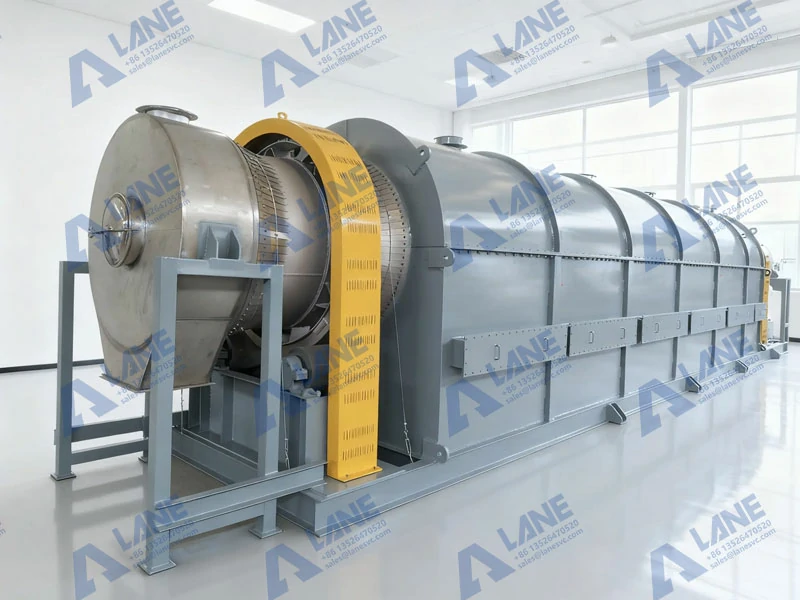
The rotary kiln provides continuous high-temperature calcination and expansion for lightweight aggregate pellets. Its internal refractory lining and optimized heat transfer structure ensure stable long-term industrial operation.
| Model | Item | Specification (m) | Capacity (m³/h) | Annual Output (10,000 m³/a) | Slope (%) | Cylinder Speed (r/min) | Reducer | Power (kW) |
| LARK-1216 | Preheating Kiln | φ1.25×18 | 2.95~3.94 | 1.8~2.4 | 4 | 1.0~5.0 | ZQ500 | 11 |
| Calcining Kiln | φ1.6×14 | 2.95~3.94 | 1.8~2.4 | 4 | 1.0~5.0 | ZQ650 | 15 | |
| LARK-1519 | Preheating Kiln | φ1.55×20 | 4.36~5.81 | 2.67~3.5 | 4 | 1.0~5.0 | ZQ650 | 18.5 |
| Calcining Kiln | φ1.9×16 | 4.36~5.81 | 2.67~3.5 | 4 | 1.0~5.0 | ZQ750 | 22 | |
| LARK-1822 | Preheating Kiln | φ1.8×22 | 5.9~7.87 | 3.61~4.8 | 4 | 1.0~5.0 | ZQ750 | 22 |
| Calcining Kiln | φ2.2×18 | 5.9~7.87 | 3.61~4.8 | 4 | 1.0~5.0 | ZQ750 | 22 | |
| LARK-2025 | Preheating Kiln | φ2.0×24 | 7.42~9.88 | 4.54~6 | 4 | 1.0~5.0 | ZSY224 | 30 |
| Calcining Kiln | φ2.5×20 | 7.42~9.88 | 4.54~6 | 4 | 1.0~5.0 | ZSY224 | 37 | |
| LARK-3030 | Preheating Kiln | φ3.0×20 – φ2.5×12 | 9.5~17.51 | 8.04~10.7 | 4 | 1.0~5.0 | ZS1450 | 75 |
| Calcining Kiln | φ3.0×22 | 9.5~17.51 | 8.04~10.7 | 4 | 1.0~5.0 | ZS1250 | 55 | |
| LARK-3230 | Preheating Kiln | φ3.2×20 – φ2.8×14 | 13.9~16.2 | 10.0~11.5 | 4 | 1.0~5.0 | ZS1450 | 55 |
| Calcining Kiln | φ3.0×22 | 13.9~16.2 | 10.0~11.5 | 4 | 1.0~5.0 | ZS1250 | 55 |
After leaving the rotary kiln, LECA pellets may still exceed temperatures of 1000°C. Direct storage or screening at such temperatures could damage downstream equipment and create serious safety risks. Therefore, an efficient cooling process is essential.
The cooling system rapidly reduces pellet temperature while recovering part of the thermal energy for reuse in the drying or combustion system. This heat recovery method significantly improves overall plant energy efficiency and reduces operating costs.
Rotary coolers are widely used in industrial LECA production lines because they provide stable cooling performance and continuous material handling capability. Proper cooling also improves the mechanical stability of finished pellets and minimizes cracking caused by sudden temperature changes.
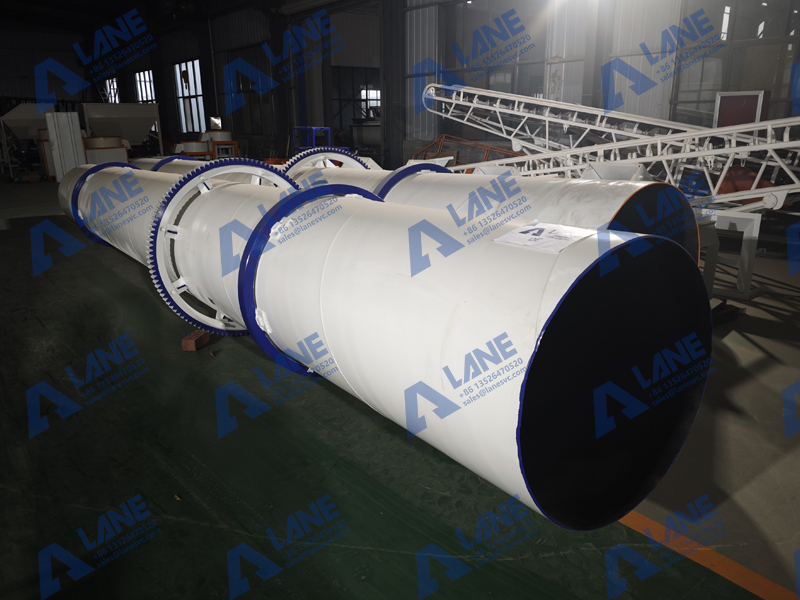
The rotary cooler uses air cooling and drum rotation to gradually lower pellet temperature while maintaining product integrity and reducing thermal shock.
| Model | Capacity(tph) | Drum Size(mm) | Rotation Speed(r/min) | Steel Plate Thickness(mm) | Lift Plate Thickness(mm) | Power(kw) |
| LARC0808 | 1-2 | Φ800*8000 | 5 | 8 | 4 | 5.5 |
| LARC1010 | 2-3 | Φ1000*10000 | 5 | 10 | 6 | 5.5 |
| LARC1212 | 3-5 | Φ1200*12000 | 5 | 10 | 6 | 7.5 |
| LARC1515 | 5-8 | Φ1500*15000 | 5 | 12 | 6 | 15 |
| LARC1616 | 8-12 | Φ1600*16000 | 5 | 12 | 6 | 18.5 |
| LARC1818 | 12-15 | Φ1800*18000 | 4 | 14 | 6 | 22 |
| LARC2020 | 20-25 | Φ2000*20000 | 4 | 14 | 6 | 37 |
| LARC2222 | 25-30 | Φ2200*22000 | 4 | 16 | 6 | 37 |
| LARC2424 | 30-35 | Φ2400*24000 | 4 | 16 | 6 | 45 |
| LARC2626 | 35-40 | Φ2600*26000 | 3 | 18 | 6 | 55 |
| LARC2828 | 40-45 | Φ2800*28000 | 3 | 18 | 6 | 75 |
| LARC3028 | 45-50 | Φ3000*28500 | 3 | 18 | 6 | 90 |
Once cooled, the finished LECA products enter the screening section for particle size classification. Different industries require different LECA particle sizes, so accurate grading is essential for meeting market demands.
Hydroponic systems generally require smaller and more uniform pellets, while construction materials may use larger lightweight aggregates for structural applications. Oversized particles can be recycled back into the crushing system, while undersized materials may be reused in granulation.
High-efficiency vibrating screeners are commonly used because they offer excellent classification accuracy, stable operation, and large processing capacity.
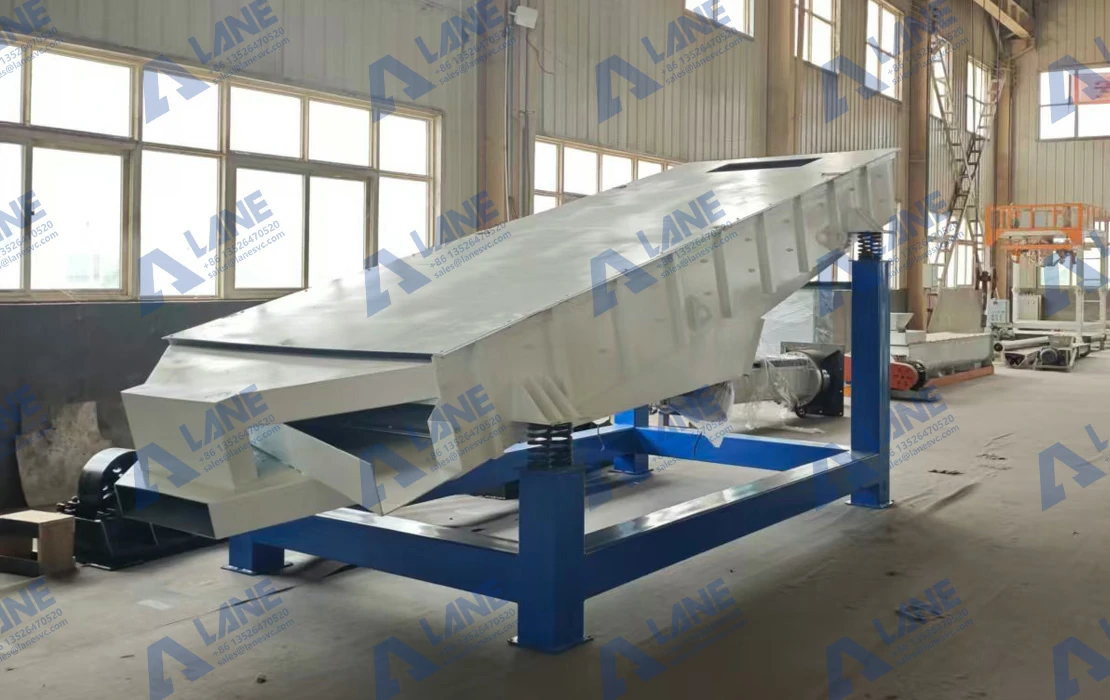
Based on customer requirements and application standards, the vibrating screener uses the vibration generated by a motor to separate particles of different sizes through a screen mesh and discharge them through separate outlets, thereby sorting LECA products into different commercial grades.
| Model | Capacity(tph) | Overall Size(mm) | Tilt Angle(°) | Amplification(mm) | Power(kw) |
| LAS-0520-1 | 0.03-5 | 2140*808*848 | 5 | 5-7 | 0.4 |
| LAS-0520-2 | 0.03-5 | 2140*808*880 | 5 | 5-7 | 0.55 |
| LAS-0520-3 | 0.03-5 | 2140*808*920 | 5 | 5-7 | 0.75 |
| LAS-1025-1 | 0.1-15 | 2300*1300*1500 | 5 | 5-7 | 0.75 |
| LAS-1025-2 | 0.1-15 | 2300*1300*1550 | 5 | 5-7 | 1.1 |
| LAS-1025-3 | 0.1-15 | 2300*1300*1600 | 5 | 5-7 | 1.5 |
Environmental protection has become an increasingly important aspect of modern LECA production lines. Crushing, drying, kiln firing, and screening processes may generate large amounts of dust and exhaust gases if not properly controlled.
To comply with environmental regulations, LANE’s LECA production line is equipped with pulse jet bag filters, cyclone dust collectors, and waste heat recycling systems. These technologies significantly reduce particulate emissions and improve workshop cleanliness.
Advanced dust collection systems can achieve filtration efficiencies above 95%, helping our clients reduce pollution while improving the working environment for plant operators.
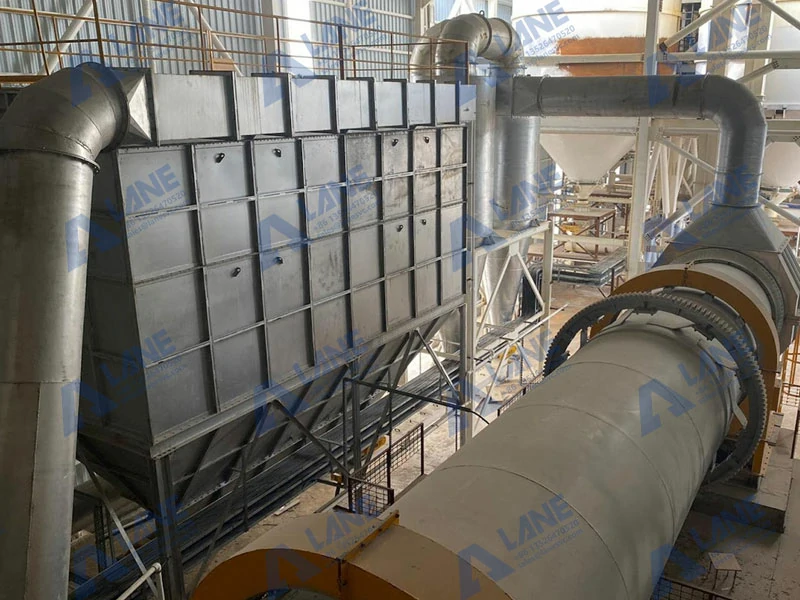
The pulse jet bag filter captures fine dust particles generated during material handling and high-temperature processing operations.
Function
| Production Capacity | Suitable Investment |
|---|---|
| 50–100 TPD | Small factory |
| 200–300 TPD | Medium plant |
| 500–1000 TPD | Large industrial project |
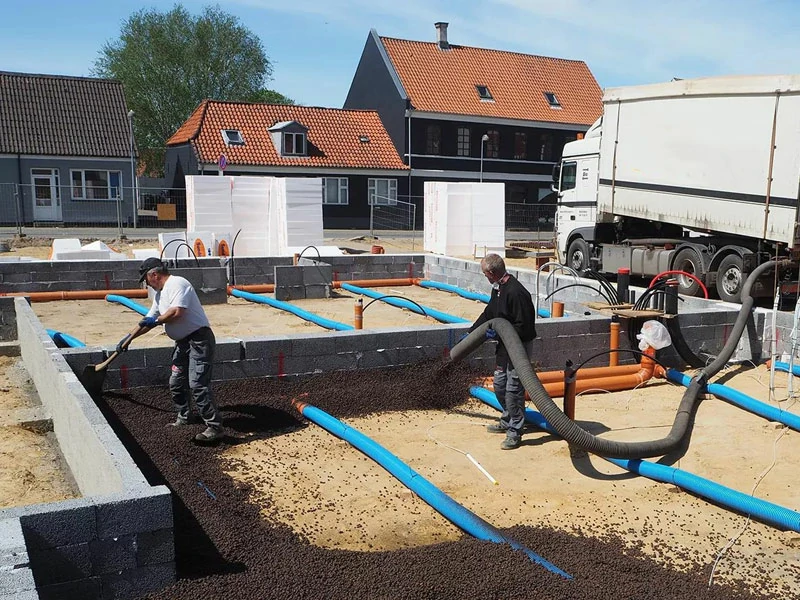
In the construction industry, LECA is widely used in lightweight concrete, insulation panels, bridge engineering, and prefabricated wall systems. Its low density helps reduce building load while improving thermal insulation and sound absorption performance.
Because of its excellent fire resistance and durability, LECA is also suitable for high-rise buildings and energy-efficient construction projects.
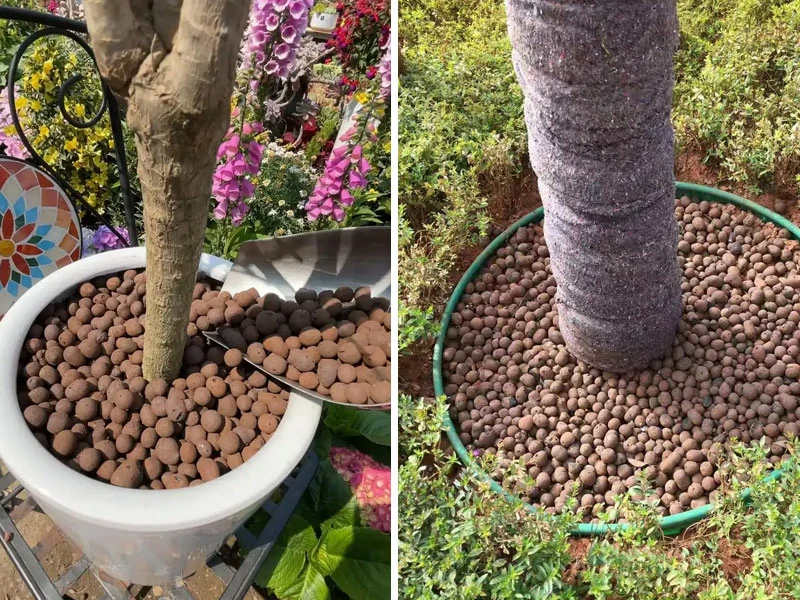
In agriculture and hydroponics, LECA pellets provide excellent water retention and root aeration. Their porous structure helps maintain oxygen supply while preventing excessive water accumulation around plant roots.
These characteristics make LECA an ideal growing medium for greenhouse cultivation, hydroponic farming, vertical agriculture, and indoor plant systems.
High Automation
PLC intelligent control reduces labor requirements.
Energy Saving
Heat recovery systems reduce fuel consumption.
Wide Raw Material Adaptability
Supports clay, sludge, fly ash, and industrial waste.
Stable Product Quality
Uniform pellet size and consistent expansion ratio.
Environmental Protection
Advanced dust removal and waste heat utilization systems.
A professional LECA production line combines advanced crushing, granulation, drying, calcination, cooling, and screening technologies to manufacture high-quality lightweight expanded clay aggregate products.
As global demand for green construction materials and sustainable agricultural systems continues to increase, LECA manufacturing plants are becoming an attractive investment opportunity for many industrial investors. Choosing suitable equipment configurations, optimizing kiln systems, and improving automation levels are key factors for achieving long-term production stability, energy efficiency, and market competitiveness.
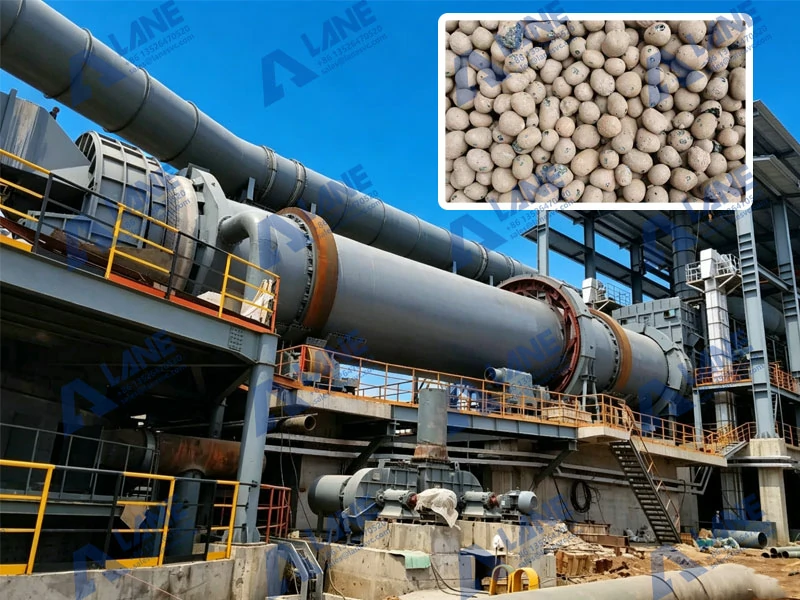
If you are planning to invest in a high-efficiency LECA production line, choosing a reliable equipment manufacturer is the key to ensuring long-term stable operation and strong return on investment. A well-designed lightweight expanded clay aggregate plant not only guarantees consistent product quality, but also significantly reduces energy consumption, maintenance cost, and production downtime through optimized system integration and automation control.
LANE provide customized LECA production line solutions ranging from small capacity pilot plants to large-scale industrial production systems. Each project can be tailored according to raw material conditions, target output, fuel type, and product specifications to ensure maximum production efficiency and profitability. With advanced rotary kiln technology, intelligent control systems, and mature engineering experience, we help customers achieve stable, efficient, and environmentally compliant LECA manufacturing worldwide.
Whether you are entering the lightweight aggregate industry for the first time or upgrading an existing plant, a professionally designed LECA production line will be the foundation of your success in the growing green building materials market.