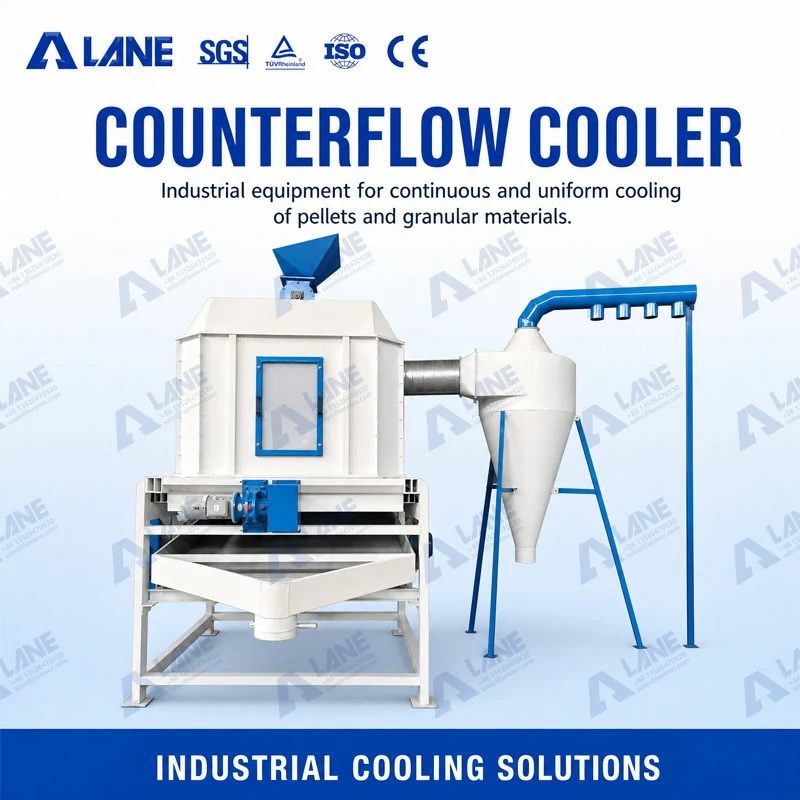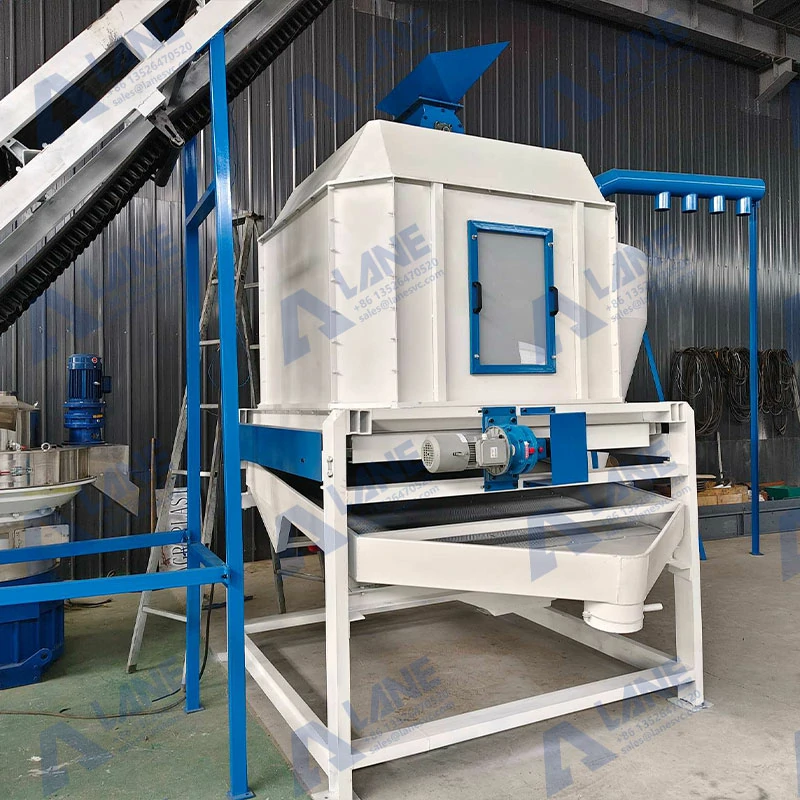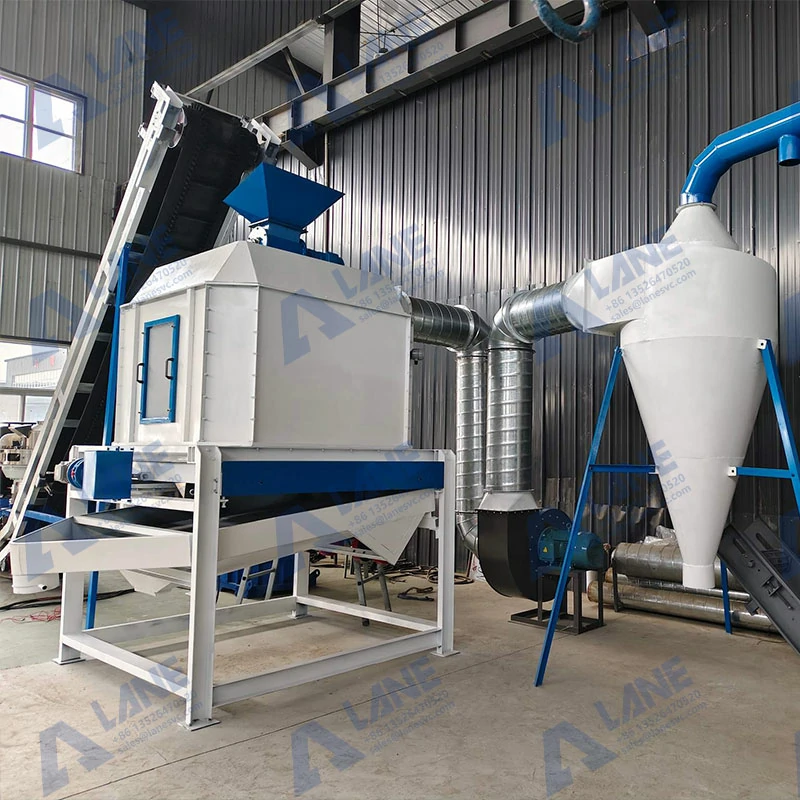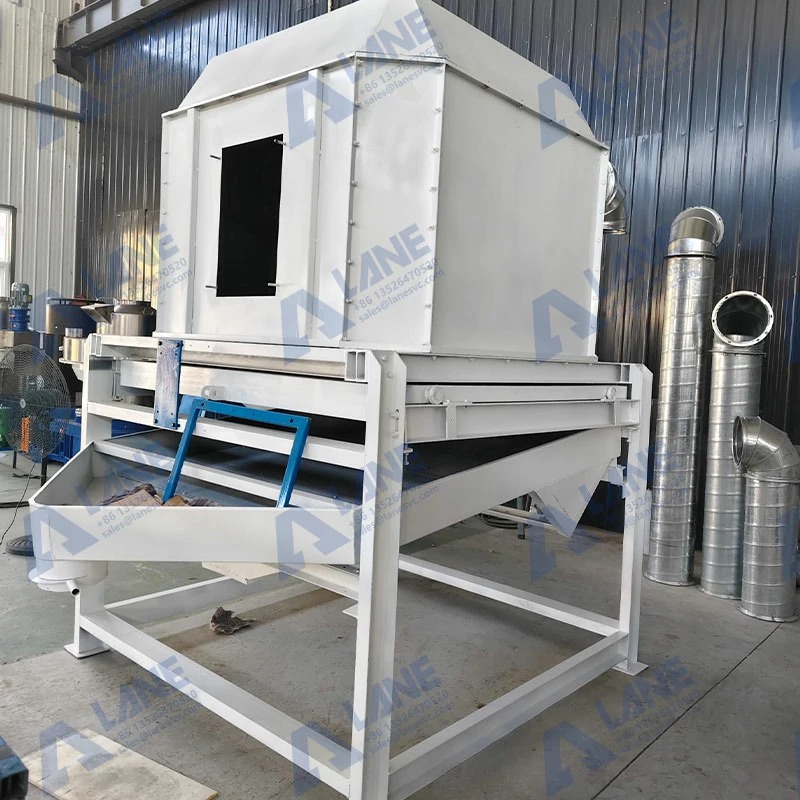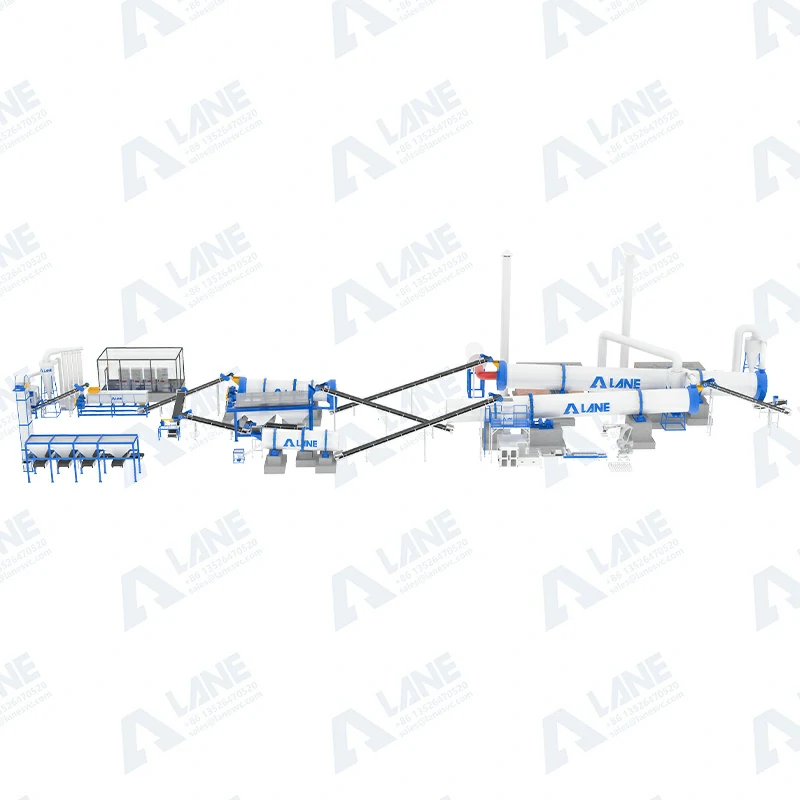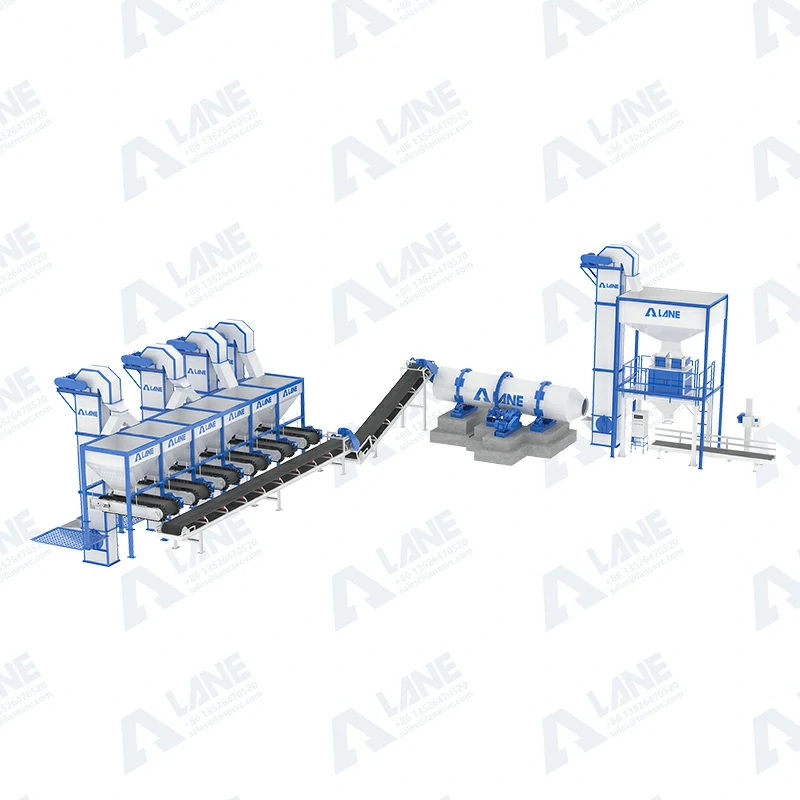
In industrial biomass pellet production (wood pellets, sawdust, straw, EFB, bagasse, and agricultural waste), the pelleting process generates intense mechanical shear and friction. Freshly extruded pellets exit the ring die pellet mill at temperatures of 75°C to 95°C (167°F – 203°F) and moisture levels of 13% to 18%.
At this stage, biomass pellets are soft, fragile, highly prone to plastic deformation, and subject to condensation during storage, which causes rapid mold growth and fines generation.
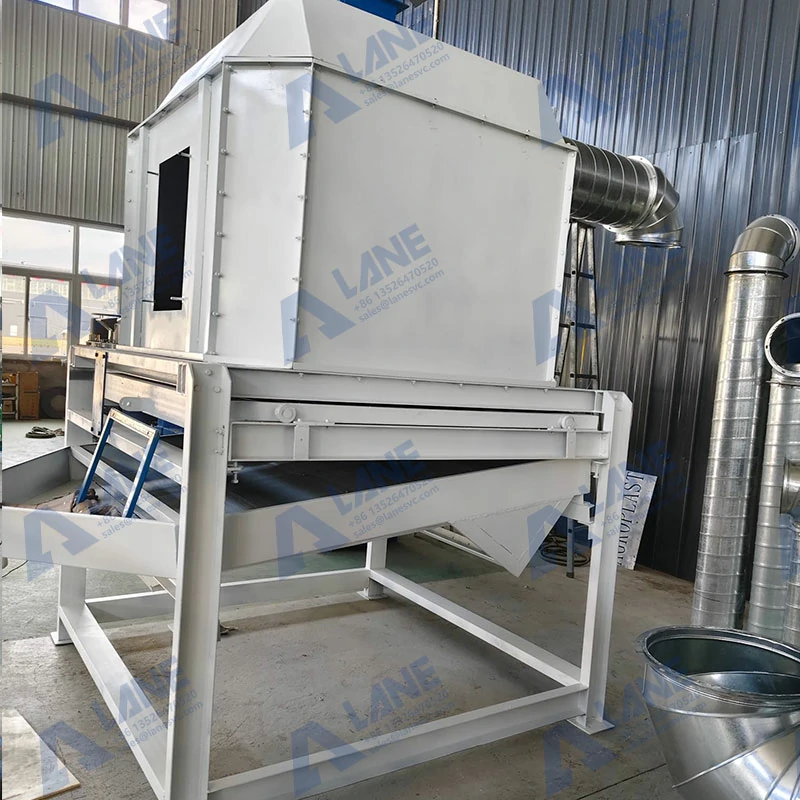
The Counter-flow Cooler for Biomass Pellets is engineered to bridge the gap between hot extrusion and downstream packaging/bulk silo storage. By utilizing a counter-current thermodynamic exchange (ambient air flowing upwards against gravitational pellet downward movement), it gradually stabilizes pellet temperature to within +3°C to +5°C of ambient temperature and reduces moisture to ≤10–12%. This process triggers starch gelatinization and lignin hardening, delivering high Mechanical Durability (PDI ≥ 97.5% per ISO 17225-2 standards).
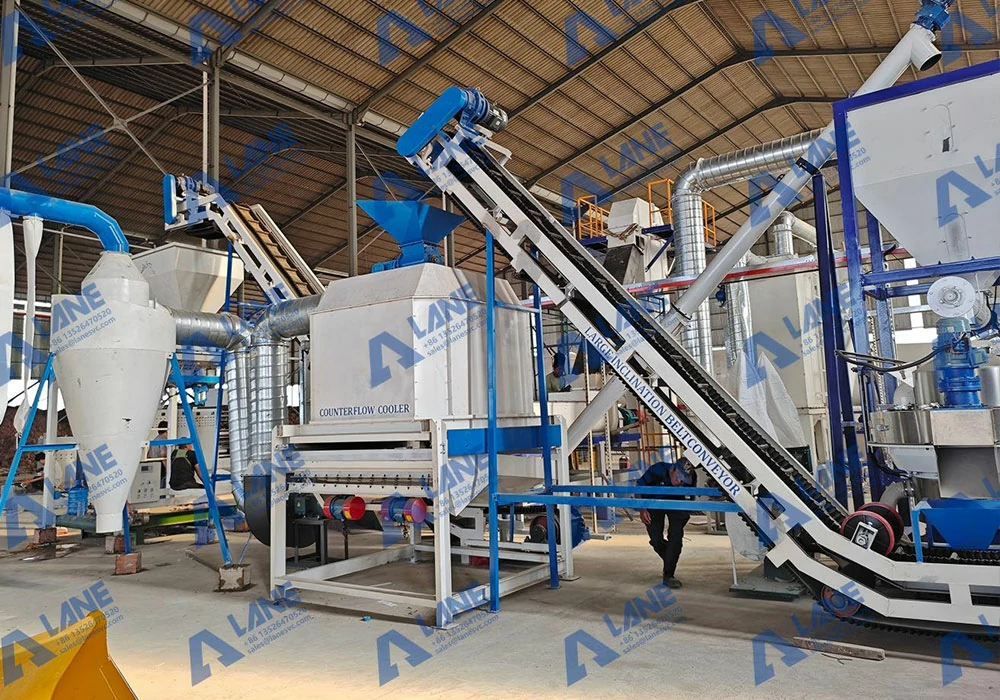
A heavy-duty industrial counter-flow cooler consists of several modular subsystems engineered for continuous 24/7 continuous operation:
| Component Name | Technical Specifications & Material Construction | Functional Role |
|---|---|---|
| Rotary Air-Lock Feeder | Stainless steel (SUS304) or wear-resistant carbon steel; adjustable flexible sealing tips; direct-drive gear motor. | Prevents air backdraft while continuously feeding hot pellets into the cooling bin without crushing them. |
| Octagonal / Square Cooling Bin | Heavy-gauge structural steel sheet with anti-corrosion coating; inspection window and maintenance door. | Octagonal design eliminates dead zones; provides uniform holding volume and controlled residence time. |
| Rotary Level Sensor / Diaphragm Indicator | High/low capacitive level sensors, explosion-proof optional (ATEX/IECEx compliant). | Accurately monitors pellet bed depth to trigger and modulate automated discharging cycles. |
| Discharge Mechanism | Hydraulic Slide Grid (for wood pellets) or Pneumatic Pendulum Grate (for soft agri-pellets). | Ensures “First-In, First-Out” (FIFO) mass flow discharge across the entire cross-section. |
| Collection Hopper & Air Plenum | Heavy-duty conical hopper with steep slide angles (>55°). | Collects cooled pellets smoothly while routing high-velocity exhaust air into the dust filtration system. |
| Exhaust Air System | High-pressure centrifugal fan, high-efficiency cyclone separator, rotary valve, and air ducts. | Extracts warm, moist exhaust air; separates aspirated dust fines and returns them to the pelletizer. |
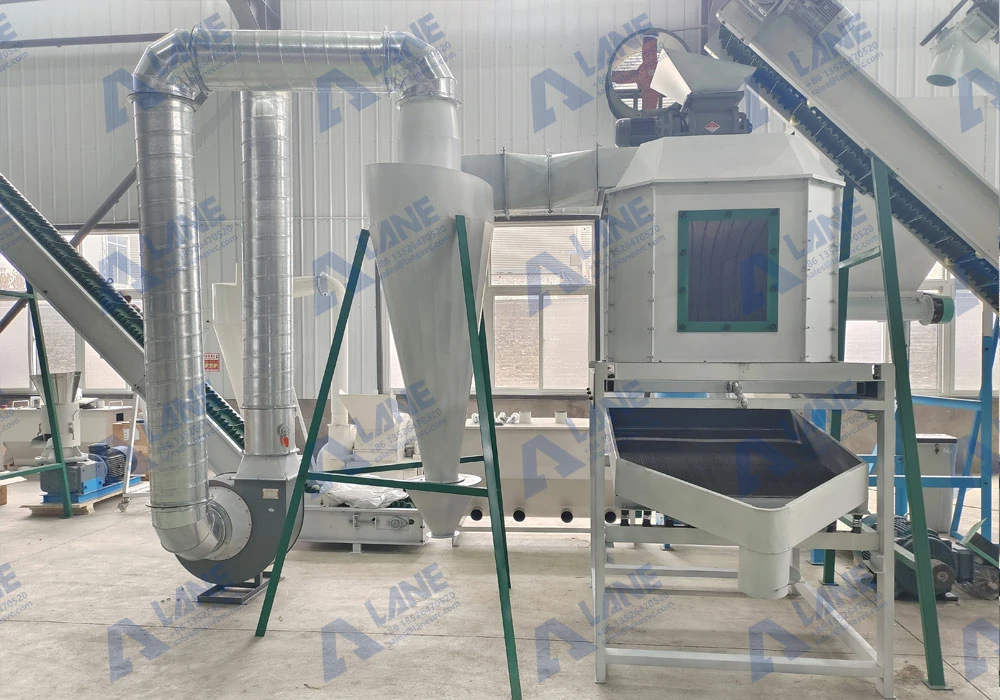
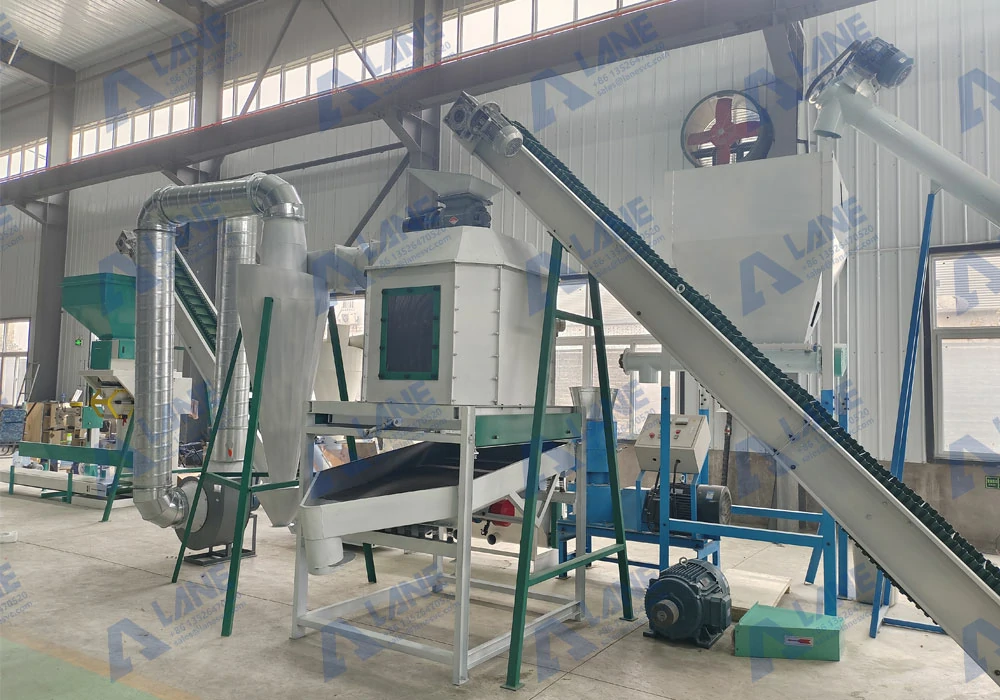
Conventional horizontal or cross-flow coolers subject hot pellets to direct blasts of cold air, causing rapid exterior shrinkage while the core remains hot and moist. This thermal stress induces severe surface cracking. The counter-flow principle cools pellets gradually from the inside out, maximizing pellet hardness, reducing fines/dust return rates to under 1.0%, and achieving compliance with ENplus A1 / ISO 17225-2 standards.
Because the exhaust air exits the system near the pellet inlet temperature, thermal energy exchange efficiency exceeds 90%. Air volume requirements are reduced by 30%–40% compared to cross-flow belt coolers, allowing the use of smaller centrifugal fans and cyclone separators, cutting electrical power consumption by up to 2.5–3.5 kWh per metric ton.
The vertical octagonal tower design takes full advantage of vertical space. It requires up to 70% less floor area than equivalent horizontal belt coolers, making it ideal for standard containerized modular plants or retrofit projects with limited plant footprint.
The absence of internal mechanical agitators and the use of an octagonal chamber prevent corners where pellets could stagnate, degrade, or create fire hazards. The hydraulic sliding grid ensures synchronized, full-cross-section discharge without bridging or material jamming.
Integrated with continuous variable bed-height sensors and dynamic discharge frequency controls, the system adjusts retention time automatically in response to upstream pellet mill throughput fluctuations.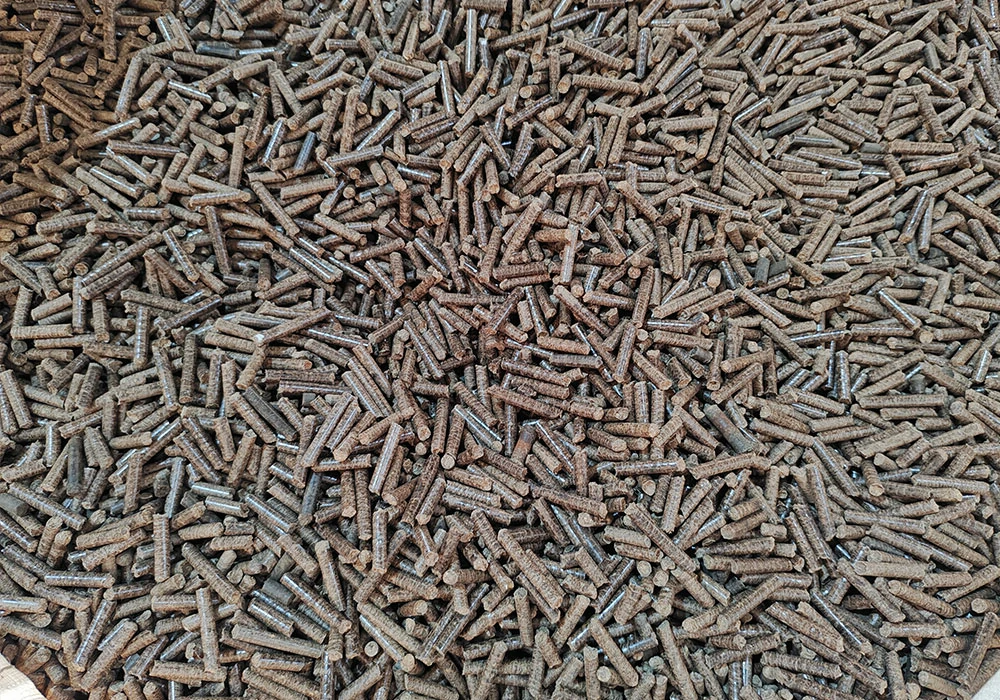
When sizing and specifying a Counter-flow Cooler for biomass pellets, consider the following parameters: