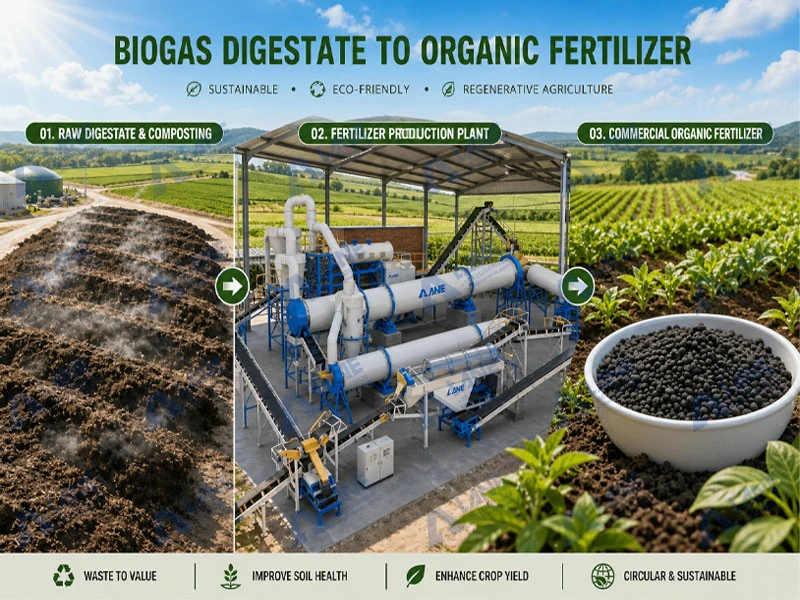
Biogas plants and large-scale anaerobic digestion (AD) facilities generate immense volumes of digestate daily. While raw solid biogas digestate is rich in organic matter, humic substances, and residual N-P-K nutrients, applying it directly to farmland presents severe challenges—such as high water content, odor, fermentation heat burning root systems, and secondary weed/pathogen hazards.
Transforming biogas digestate into commercial, standardized powder or granular organic fertilizer solves the environmental disposal bottleneck and creates a high-margin revenue stream.
This comprehensive technical guide breaks down the industrial production process, equipment requirements, operational parameters, and plant design considerations.
Before designing a fertilizer production line, it is essential to analyze the feedstock characteristics:
| Parameter | Raw Solid Digestate Cake | Target for Finished Organic Fertilizer |
|---|---|---|
| Moisture Content | 65% – 75% (after mechanical dewatering) | ≤ 15% – 20% (Granular) / ≤ 30% (Powder) |
| Organic Matter | 35% – 55% (dry basis) | ≥ 45% – 60% (regional standard dependent) |
| Total N-P-K | 3% – 5% (dry basis) | ≥ 5% – 8% (fortified based on crop needs) |
| C/N Ratio | 12:1 – 18:1 | 25:1 – 30:1 (optimal for aerobic composting) |
| pH Value | 7.2 – 8.5 | 6.5 – 8.0 |
| Biochemical State | Semi-fermented (lacks complete humification) | Fully mature, pathogen-free, humified |
Converting wet anaerobic digestate into marketable organic fertilizer involves two main phases: Front-end Fermentation & Maturation and Back-end Granulation & Packaging.
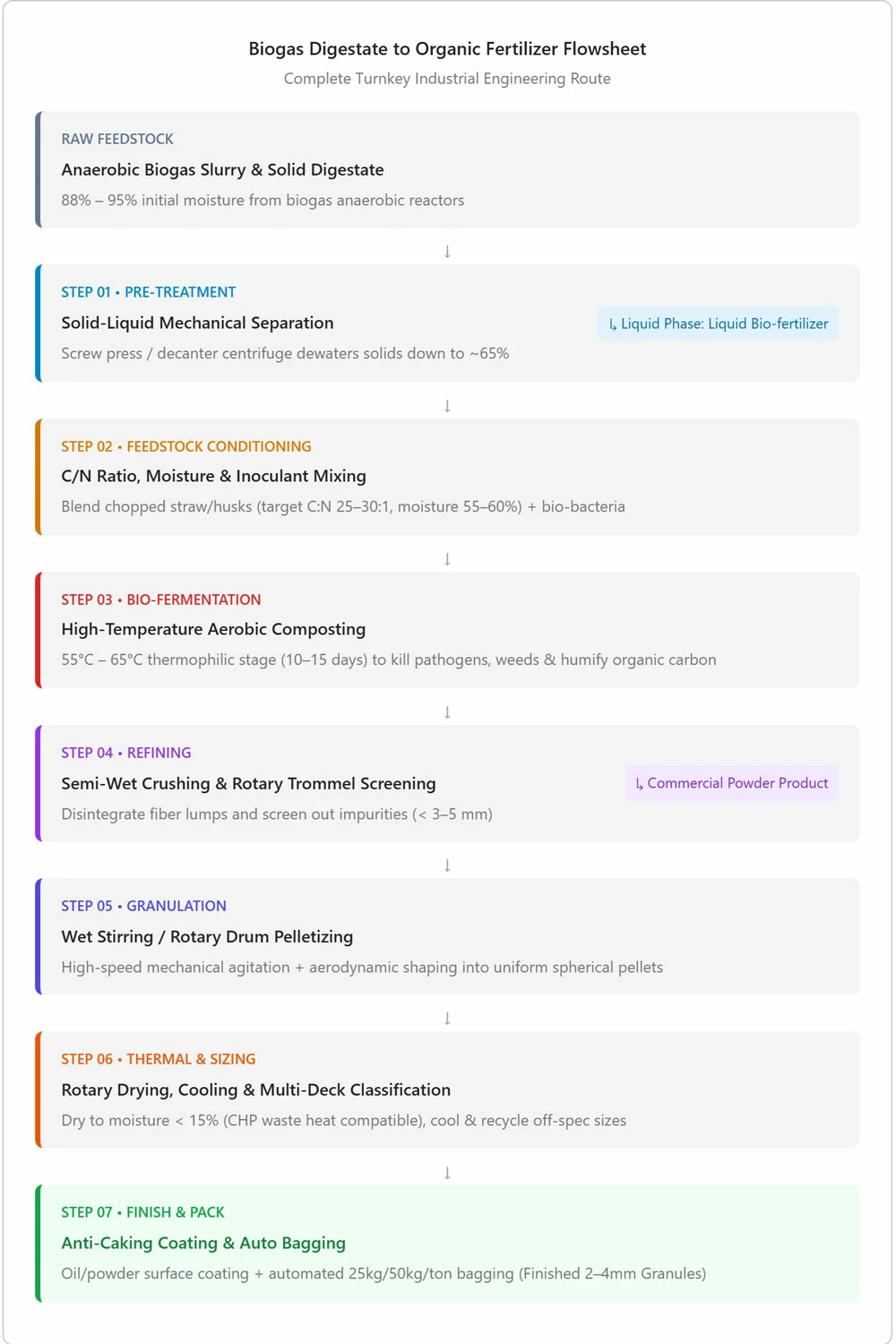
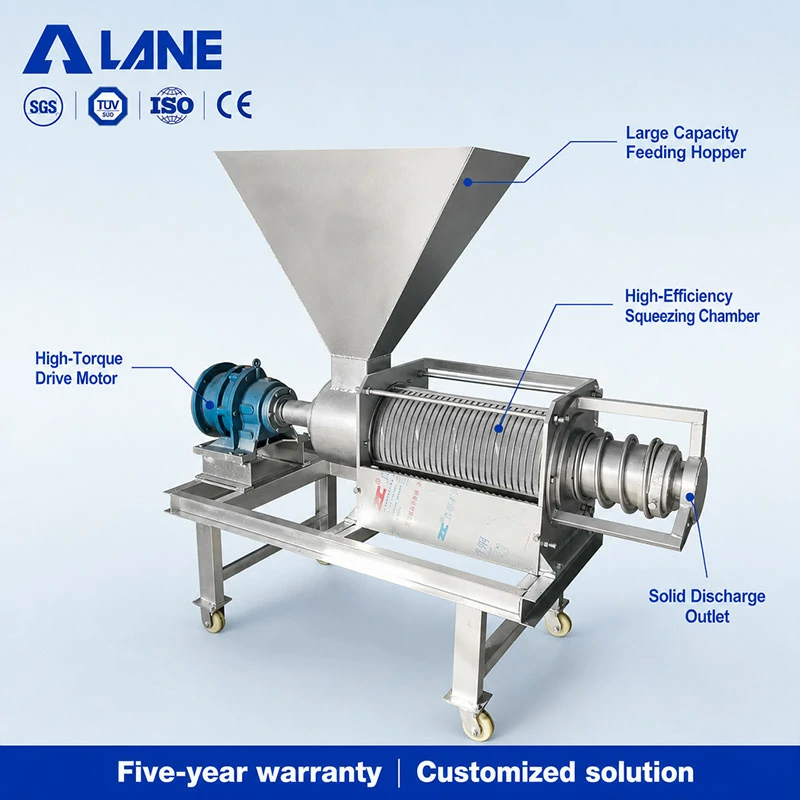
Raw anaerobic biogas digestate discharged from the digester contains 88%–95% water.
Solid biogas digestate has a low C/N ratio (typically 12:1 to 18:1) and a dense, compacted texture with poor air permeability. Aerobic composting requires a C/N ratio of 25:1 to 30:1.
Aerobic fermentation is the core step to eliminate pathogens, weed seeds, and parasite eggs while decomposing unstable organic compounds into stable humic acids.
Composted material contains lumps, fiber clusters, and oversized particles that must be homogenized.
Granular fertilizer offers superior storage stability, zero dusting, compatibility with mechanical seed drills, and higher market commercial value compared to powder.
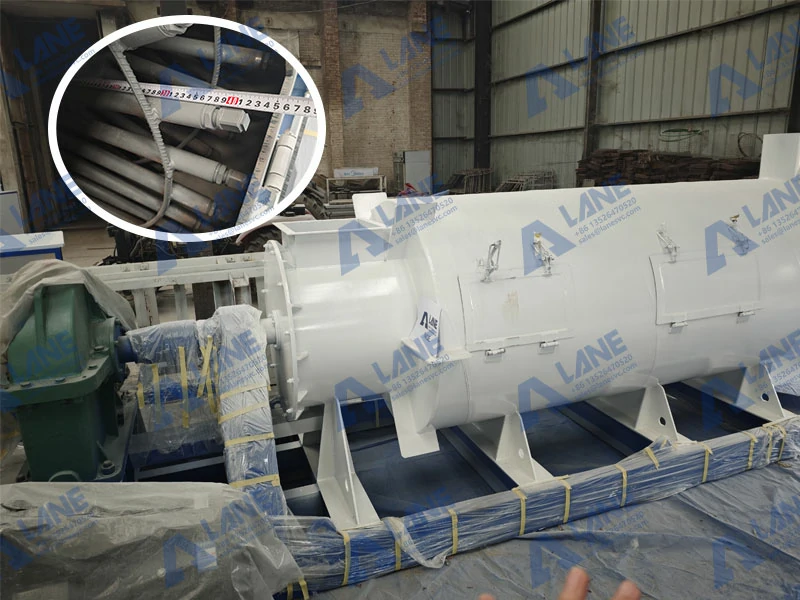
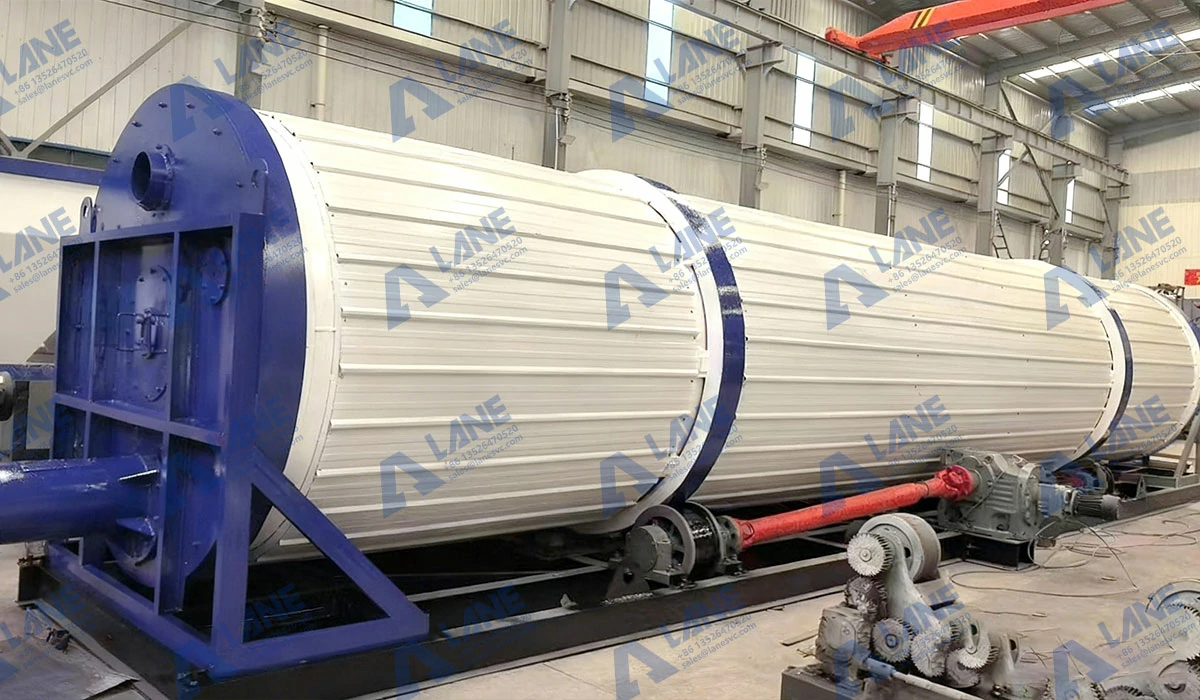
Granules formed in the wet state contain approximately 20%–25% moisture and require drying to prevent mold growth and caking.
| Section | Equipment Name | Function / Purpose |
|---|---|---|
| Pre-treatment | Screw Press Dewatering Machine | Reduces digestate moisture from 90% to 65% |
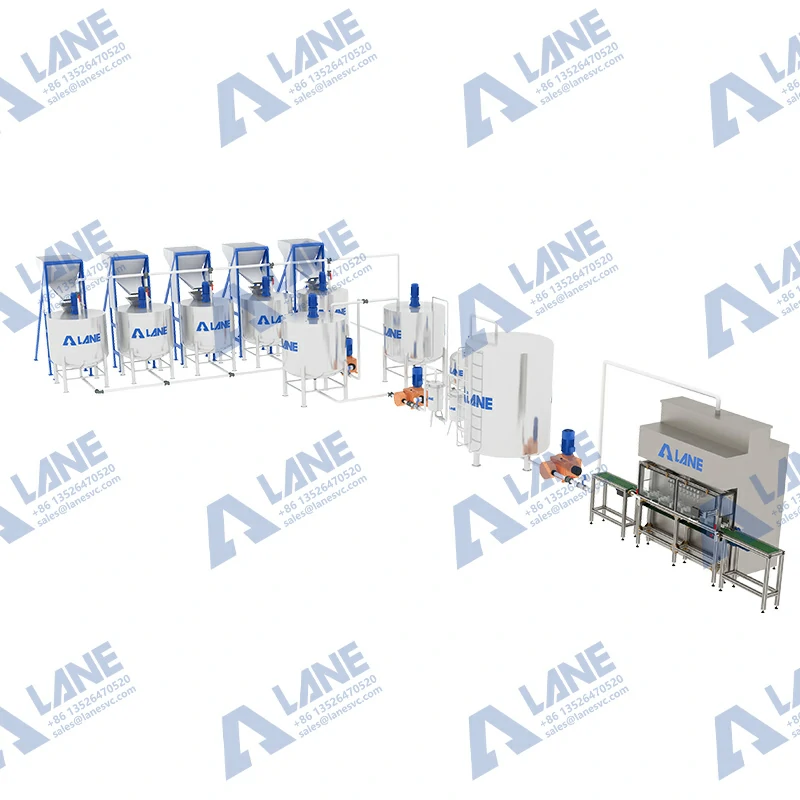
| Batching | Multi-hopper Automatic Batching System | Precise ratio mixing of digestate, straw, and minerals |
| Fermentation | Groove/Windrow Hydraulic Compost Turner | Aerates, mixes, and regulates compost temperature |
| Refining | Semi-Wet Vertical Chain Crusher | Disintegrates compost lumps and fibers |
| Separation | Rotary Trommel Screening Machine | Removes oversized debris and fibers |
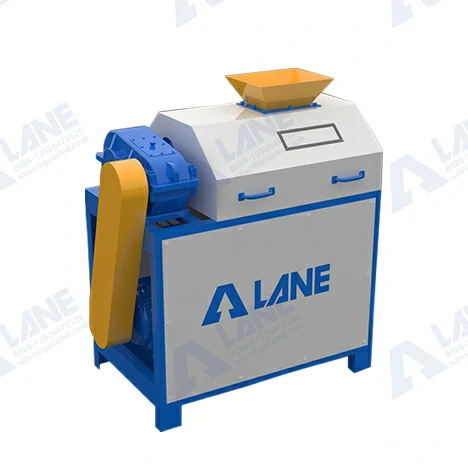
| Granulation | Wet Agitation / Rotary Drum Granulator | Shapes uniform spherical granules (2–4 mm) |
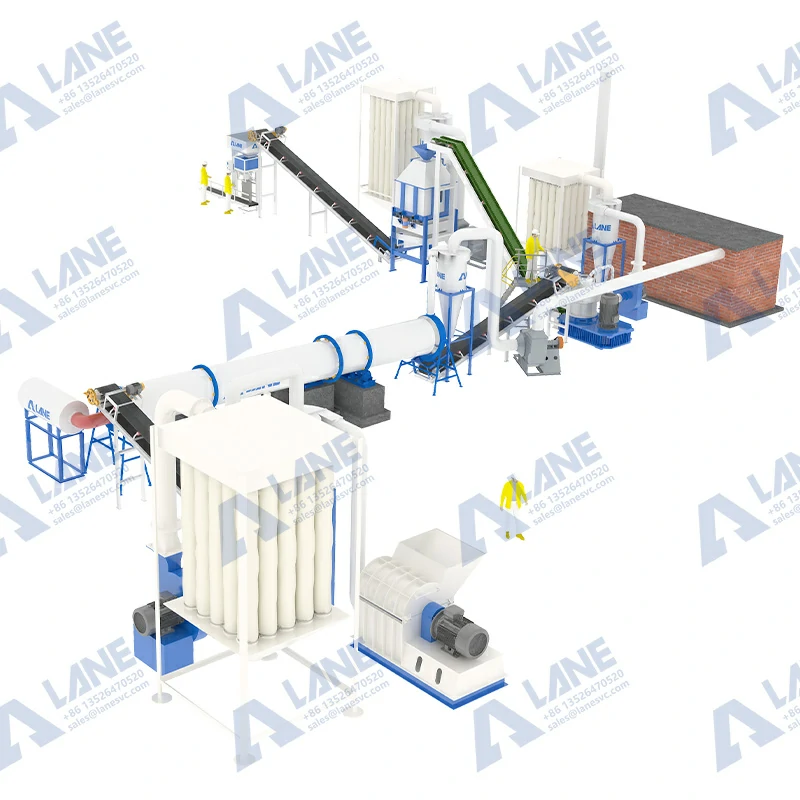
| Thermal | Rotary Drum Dryer & Gas Cyclone Dust Collector | Thermal moisture reduction & emission purification |
| Cooling | Counterflow / Rotary Cooler | Stabilizes pellet temperature & hardness |
| Packing | Automated Dual-Nozzle Packing Scale | High-speed packaging, sewing, and palletizing |
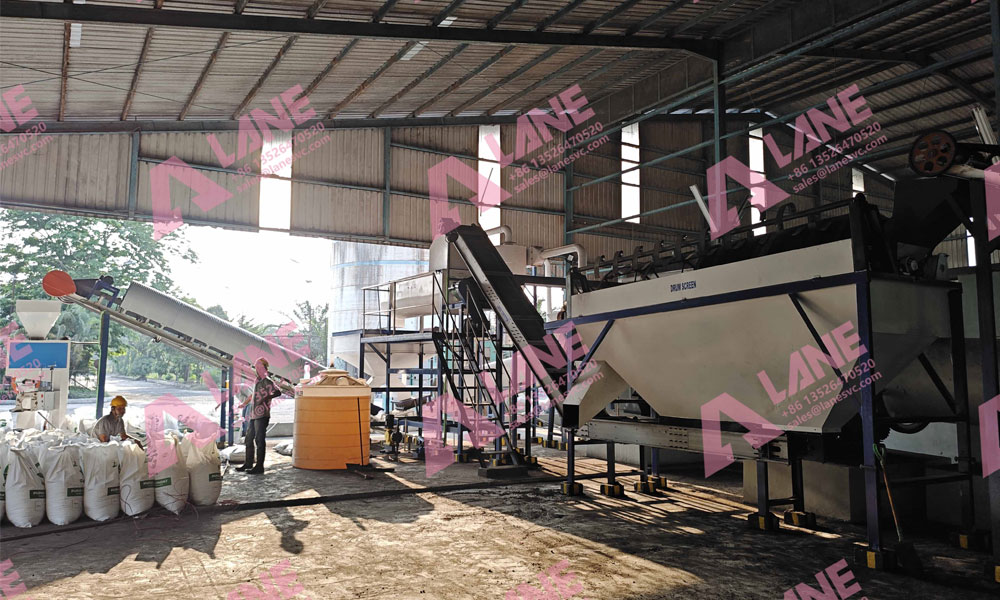
No. Raw digestate contains anaerobic metabolites, high salinity, active pathogens, and volatile organic acids. Without aerobic composting, it will deplete soil oxygen, generate root-burning heat in the soil, and cause severe crop damage.
For wet-type rotary agitation granulators, the ideal raw material moisture is 28% – 35%. For double-roller dry extrusion granulators, moisture must be controlled between 10% – 15%.
Due to moisture loss (dewatering and drying) and organic matter decomposition during composting, it typically requires approximately 3.5 to 4.5 tons of dewatered solid biogas digestate (at 65% moisture) and auxiliary carbon materials to yield 1 ton of finished granular fertilizer (at 12% moisture).
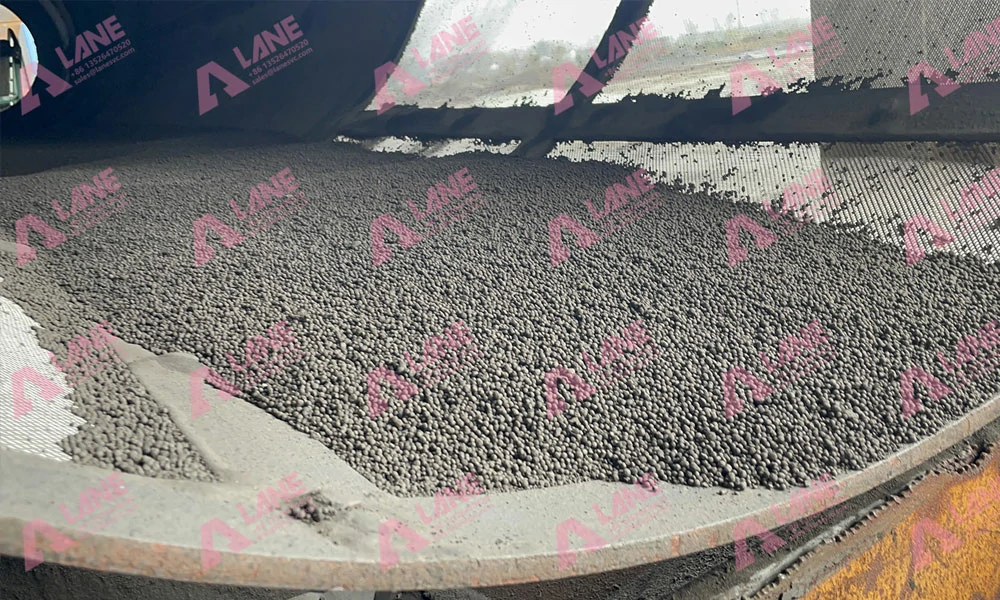
Whether you need a standalone dewatering and composting system or a complete automated 10,000–100,000 Ton/Year Granular Fertilizer Production Line, our engineering team provides turnkey plant design, customized equipment manufacturing, and on-site commissioning.
👉 [Request a Free Engineering Layout & Project Quotation Today]